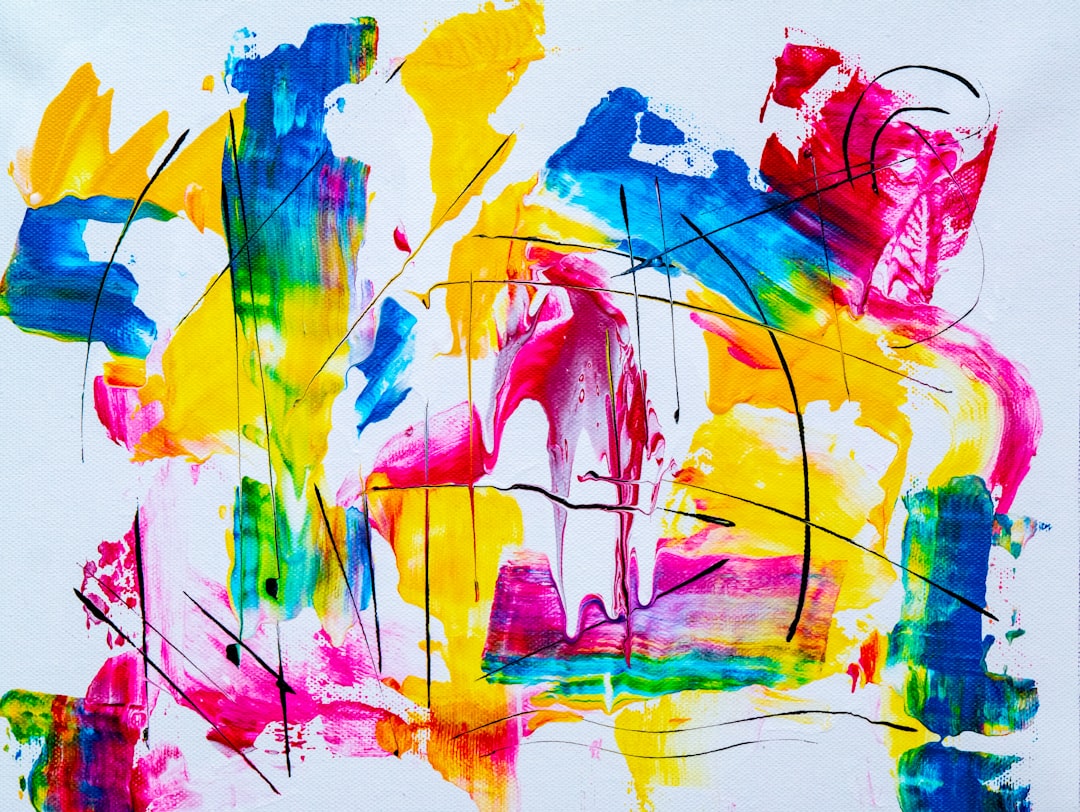
You do not have to be able to draw to benefit from art therapy. This is the first thing many people get wrong — and it is the thing most likely to stop them from exploring an approach that might genuinely help.
Art therapy is not an art class. The quality of what you make is entirely beside the point. What matters is the process of making it, and what emerges — emotionally, psychologically, and sometimes physically — in the act of creation.
Key Takeaways
- Art therapy is a form of psychotherapy that uses creative processes as a primary means of communication and exploration, not just a supplementary activity
- No artistic ability or experience is required — the process matters, not the product
- It is particularly effective when words feel inadequate: for trauma, grief, complex emotions, or experiences that predate language
- Art therapy is delivered by qualified registered therapists with specific training, not simply artists who also counsel
- Growing evidence supports its effectiveness across a wide range of mental health conditions
What Is Art Therapy?
Art therapy is a form of psychotherapy that uses the creative process — drawing, painting, sculpting, collage, and other visual media — as a therapeutic medium. The British Association of Art Therapists (BAAT) defines art therapy as a form of psychotherapy that uses art media as its primary mode of expression and communication.
Critically, this means that art-making in therapy is not a distraction or a warm-up exercise for the "real" talking. It is itself the therapeutic work.
An art therapist is trained in both psychotherapy and art. They understand how to hold the therapeutic space, how to work with unconscious material, and how to facilitate the relationship between client, therapist, and artwork. They do not teach art — they support a process of psychological exploration through art.
Art therapists in the UK are regulated by the Health and Care Professions Council (HCPC) and must complete a relevant postgraduate degree.
Why Make Art in Therapy?
The question is worth taking seriously. If we have words — and most adults are quite articulate about their problems — why add creative materials?
Some things resist words. Many of the most significant human experiences — trauma, grief, early childhood experience, states of dissociation, spiritual and existential questions — do not fit neatly into language. They exist in the body, in sensation, in image. Art provides a form through which these experiences can be expressed without requiring verbal translation.
The process reveals what the conscious mind does not know. When you engage in making something — choosing colours, responding to materials, making marks without a predetermined plan — you often find that the image reveals things about your inner state that you were not consciously aware of. This is not mysticism. It is the way that preconscious material surfaces through expressive activity that bypasses the verbal-analytical mind.
Art creates an object that can be reflected upon. Once an image is made, it exists outside you. You and the therapist can both look at it. There is a triangulation — client, therapist, image — that changes the dynamics of the relationship and creates a different kind of reflective space than conversation alone allows.
Materials have their own qualities. Clay invites pressure, texture, and working with the hands in ways that feel grounding and physical. Watercolour flows unpredictably. Pencil offers control. Collage involves selection and juxtaposition. Each medium has a relationship with different aspects of experience, and the choice of material is itself often informative.
It is not reliant on verbal fluency. Art therapy is valuable for people who find talking difficult — whether because of trauma, autism, language barriers, acquired communication difficulties, or simply a preference for non-verbal modes of expression.
What Happens in an Art Therapy Session?
Sessions typically last 50 minutes to an hour, in individual or group formats.
Individual art therapy follows a pattern broadly similar to other psychotherapy: consistent time, place, and therapist; a confidential space; ongoing therapeutic relationship. The difference is that materials are available and their use is invited, though never compelled.
In practice, a session might begin with a brief check-in about the week. The therapist may offer a directive (a prompt or theme — "make something about what you're carrying right now") or an open invitation to begin making. The client works while the therapist observes attentively, sometimes working alongside them, sometimes simply present.
After the period of making, there is reflection. What does the client notice about what they made? What feelings arose in the process? What do they see in the image now? The therapist may make observations, ask questions, draw connections to other material from therapy. The image becomes a focus for exploration rather than an end in itself.
Group art therapy adds the dimension of witnessing and being witnessed. Members make their own work and then share it with the group. The experience of creating alongside others, of having your work seen and responded to, and of responding to the work of others adds a relational layer that individual therapy cannot provide.
Who Benefits from Art Therapy?
Art therapy has been researched across a wide range of populations and conditions. Evidence supports its use for:
Trauma and PTSD — Art therapy provides a non-verbal route to processing traumatic experience without requiring narrative reconstruction, which can be retraumatising. The image-based nature works with the way traumatic memory is encoded (in sensory-perceptual rather than narrative form).
Depression — Creative expression can help externalise depressive states, reduce isolation, and engage the reward system in ways that low mood inhibits through normal means.
Anxiety — The focused, sensory engagement of making art activates the parasympathetic nervous system and provides a grounding alternative to rumination.
Grief and loss — Art provides a way to give form to grief that can be too overwhelming or too complex for words. Collage is often used to create tribute works; painting can express emotional states beyond what language conveys.
Dementia and cognitive decline — Creative ability is preserved much later than verbal ability in many forms of dementia, and art therapy provides a meaningful form of expression and connection when language becomes difficult.
Autism and neurodivergence — Art therapy is not dependent on verbal communication or on social interaction in the way that traditional talking therapies are, making it more accessible for some autistic people or those with communication differences.
Children and young people — Children communicate primarily through play and image rather than words. Art therapy is therefore often a more natural and effective medium for younger clients.
Complex psychological presentations — For clients for whom words feel either insufficient or threatening, art therapy can provide a way into therapeutic work that is less directly confrontational.
Common Misconceptions Addressed
"I'm not artistic, so this isn't for me." Art therapy has nothing to do with artistic merit. You will not be evaluated, critiqued, or asked to produce anything technically accomplished. A rough scribble that genuinely expresses your anger is more therapeutically relevant than a technically perfect drawing that says nothing real about your inner state. Therapists are trained to respond to the psychological content of the work, not its aesthetic quality.
"Surely just talking would be easier." For many people, in many situations, yes. Talking therapy is effective and remains the most widely used approach. But for some experiences — particularly those that predate language, are held in the body, or have resisted verbal processing — art provides a different and sometimes more direct route to what needs to be explored.
"I did art as a child in school. This sounds similar." Art in education aims to develop skills, aesthetic sensibility, and creative expression within a curriculum. Art therapy aims to support psychological health. The resemblance is superficial. An art therapy session is a clinical encounter with a trained psychotherapist, not an art lesson.
"I'll have to make something meaningful, which puts me under pressure." A good art therapist creates an environment where there is no pressure to produce anything in particular, and no correct response to any directive. Whatever you make — even if you decide to make nothing — is valid. The absence of expectation is itself therapeutic.
How Is Art Therapy Different from Other Creative Therapies?
Art therapy specifically uses visual art media. It is distinct from:
- Music therapy — uses musical activity (listening, creating, improvising) as the primary medium
- Drama therapy — uses embodied dramatic play, role, and story
- Dance movement therapy — uses body movement and dance
- Creative writing therapy / poetry therapy — uses the written or spoken word
All of these fall under the broader umbrella of creative arts therapies or expressive arts therapies. Some therapists are trained in integrative expressive arts approaches that draw on multiple modalities.
Finding Art Therapy in the UK
Regulated art therapists must be registered with the HCPC (Health and Care Professions Council) and use the protected title "Art Therapist" or "Art Psychotherapist."
Art therapy is available through:
- NHS services — particularly in mental health trusts, schools, and specialist services, though availability varies significantly by region and waiting lists can be long
- Private practice — increasingly accessible, with many therapists offering both in-person and online sessions
- Voluntary and charity sector — arts-based mental health organisations often offer accessible or subsidised therapy
- Schools and educational settings — particularly for children and young people
When seeking art therapy privately, verify your therapist's HCPC registration and check that they have completed an HCPC-approved postgraduate training programme.
Frequently Asked Questions
Q: Can I do art therapy online? A: Yes, though it requires some adaptation. Online art therapy works well when clients have access to basic art materials at home. The therapist will guide you in what to have available. Some specific applications (such as working with large-scale materials or certain group processes) are more difficult remotely, but the majority of art therapy work translates to the online format effectively.
Q: How many sessions will I need? A: This varies according to the complexity of what you are bringing and your therapeutic goals. Brief, focused work (perhaps 8-12 sessions) addresses specific issues. Open-ended, longer-term work supports deeper exploration. Your therapist will review progress with you.
Q: Do I have to keep what I make? A: No. Some clients choose to keep their artwork; others prefer to leave it with the therapist, tear it up, or discard it. What happens to the work is your choice. The process of destroying a piece can itself be therapeutically significant in some contexts.
Q: I've had bad experiences with art at school. Will this be similar? A: Therapy contexts are fundamentally different from educational ones. There is no evaluation, no comparison, no skill requirement. Many people who experienced art at school as a source of shame or judgement find art therapy liberating specifically because it strips away all of that.
The Bottom Line
Art therapy offers what other therapeutic modalities cannot always provide: a non-verbal route to the pre-verbal, sensory, and imagistic dimensions of human experience. For some people, in some circumstances, making something is simply more honest than saying something.
Whether you are working through trauma, grief, anxiety, depression, or a deeper existential questioning, the invitation is the same: pick up the materials, make something, and see what you find.
At Kicks Therapy, we take an integrative humanistic approach to therapy. While we do not currently offer dedicated art therapy sessions, our therapists are trained in approaches — including Gestalt and Person-Centred work — that honour the full range of human expression, including creative and somatic dimensions.
For a free 15-minute introductory call, contact us today. Sessions available in-person in Fulham (SW6), online throughout the UK, and through walking therapy in South West London.
This article is for informational purposes only. For personalised therapeutic support, please consult a qualified mental health professional.
Related Topics:
Ready to start your therapy journey?
Book a free 15-minute consultation to discuss how we can support you.
Book a consultation→