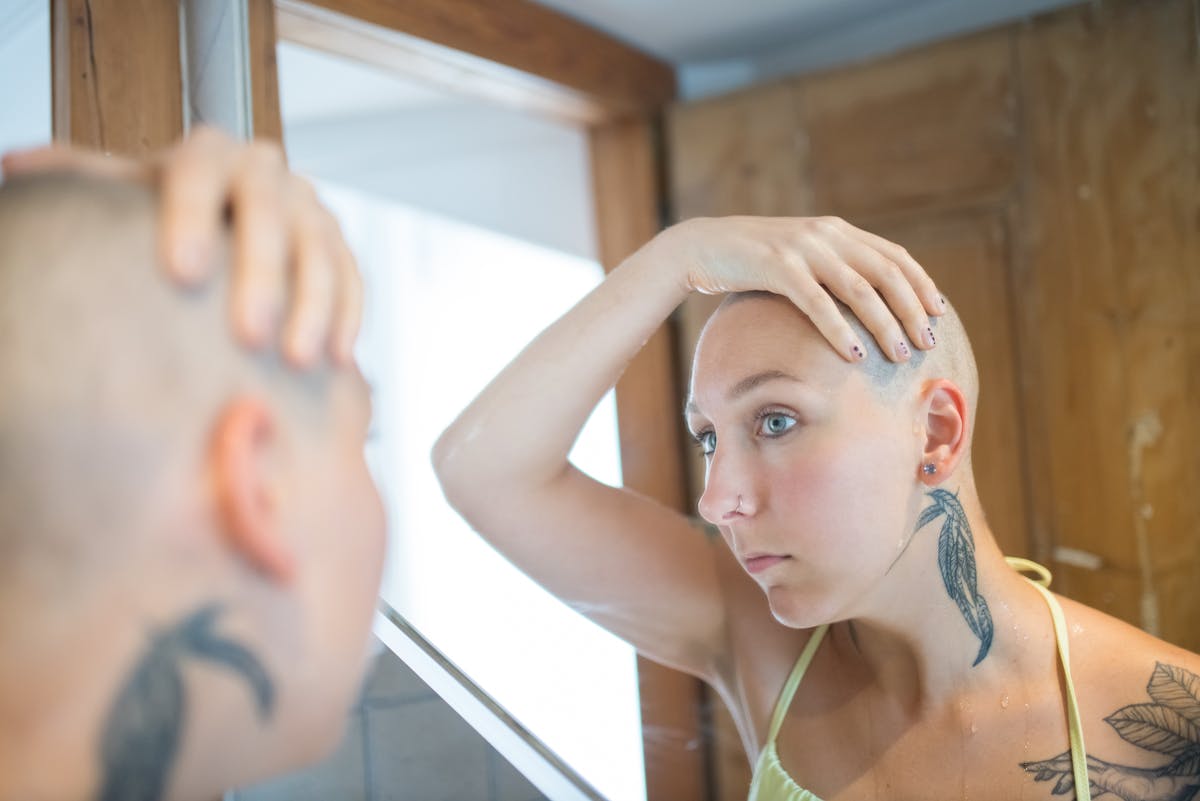
You check the mirror again. And again. What you see confirms what you already know—that flaw is obvious, glaring, impossible to ignore. You can't understand why others don't seem to notice. Perhaps they're just being polite. Perhaps they're secretly repulsed.
You've cancelled plans because you couldn't face being seen. You've spent hours trying to fix, hide, or cover the problem. You've researched surgical options. The concern has taken over your life in ways you never expected.
If this sounds painfully familiar, you might be experiencing body dysmorphic disorder—a condition that affects roughly 2% of the population but remains widely misunderstood. This guide explains what BDD actually is, how it differs from ordinary appearance concerns, and how therapy can help you break free from its grip.
What Is Body Dysmorphic Disorder?
Body dysmorphic disorder (BDD) is a mental health condition where someone becomes intensely preoccupied with perceived flaws in their appearance that are either very minor or not observable to others at all.
The key word is "perceived." To the person with BDD, the flaw feels absolutely real and utterly obvious. To everyone else, it's either invisible or unremarkable. This gap between perception and reality is one of BDD's cruelest aspects—sufferers often feel dismissed or disbelieved when they try to explain their distress.
BDD is classified as an obsessive-compulsive related disorder, sharing features with OCD including:
- Intrusive, unwanted thoughts
- Repetitive behaviours aimed at reducing distress
- Significant time consumption (often hours daily)
- Difficulty controlling the preoccupation despite wanting to
It's not vanity. It's not fishing for compliments. It's a genuine disorder that causes real suffering.
Common Areas of Concern
BDD can focus on any body part, but certain areas are particularly common:
Face and head:
- Skin (acne, scarring, wrinkles, complexion)
- Nose (size, shape, symmetry)
- Hair (thinning, texture, hairline)
- Eyes (size, shape, bags)
- Ears (size, prominence)
Body:
- Overall body shape or size
- Specific areas (stomach, thighs, chest)
- Muscle definition (muscle dysmorphia, sometimes called "bigorexia")
- Genitals
The focus can shift over time. Someone might obsess about their nose for months, then their attention moves to their skin, then to their hair. This shifting is actually a clue that the problem isn't really about any specific body part—it's about the underlying condition.
How BDD Differs from Normal Appearance Concerns
Everyone has moments of dissatisfaction with their appearance. What makes BDD different?
| Normal appearance concern | Body dysmorphic disorder |
|---|---|
| Occasional or situational | Persistent (most days) |
| Can be distracted from | Dominates thoughts for hours |
| Doesn't significantly affect daily life | Causes major life impairment |
| Response proportionate to actual appearance | Response vastly exceeds any real issue |
| Can accept reassurance | Reassurance provides no lasting relief |
| Limited checking behaviours | Extensive rituals (mirror checking, comparing, camouflaging) |
The threshold for clinical BDD is typically:
- At least one hour per day spent on appearance concerns (often many more)
- Significant distress or impairment in daily functioning
- Preoccupation not better explained by an eating disorder
The Hidden Burden: How BDD Affects Life
BDD rarely stays contained. Its tentacles reach into every area of life.
Social Life
People with BDD often:
- Avoid social situations where they feel exposed
- Struggle to maintain eye contact (worried about their own appearance being scrutinised)
- Avoid having photographs taken
- Cancel plans when they feel particularly "bad"
- Struggle to be present in conversations (preoccupied with appearance thoughts)
- Avoid romantic relationships or struggle with intimacy
Work and Education
BDD can lead to:
- Arriving late due to extended grooming rituals
- Difficulty concentrating on tasks
- Avoiding certain job roles (customer-facing, presentations)
- Missing deadlines or opportunities
- Underperforming relative to ability
- Career choices driven by avoidance rather than interest
Daily Functioning
Hours each day may be consumed by:
- Mirror checking (or mirror avoidance)
- Grooming, makeup application, or hair styling
- Researching cosmetic procedures
- Comparing oneself to others (in person or on social media)
- Seeking reassurance from others
- Camouflaging (clothing, posture, makeup, angles)
- Mental rituals (replaying interactions, analysing others' reactions)
Mental Health
BDD frequently coexists with:
- Depression (often severe)
- Anxiety disorders
- Social anxiety
- OCD
- Eating disorders
- Substance misuse
- Suicidal thoughts
Studies suggest that suicide rates in BDD are alarmingly high—higher than most other psychiatric conditions. This isn't attention-seeking. The suffering is genuine and can feel unbearable.
Why BDD Develops
Like most mental health conditions, BDD results from a combination of factors.
Biological Factors
- Genetics: BDD runs in families and shares genetic overlap with OCD.
- Brain differences: Research shows differences in visual processing and facial recognition in people with BDD—they may literally see their appearance differently.
- Serotonin: BDD often responds to medications that affect serotonin, suggesting neurochemistry plays a role.
Psychological Factors
- Perfectionism: Impossible standards applied to appearance.
- Core beliefs: Deep beliefs about being defective, unlovable, or fundamentally flawed.
- Attention bias: Zooming in on perceived flaws while ignoring the whole picture.
- Interpretation bias: Reading neutral or positive feedback as confirming the flaw.
Life Experiences
- Bullying or teasing about appearance: Even single incidents can leave lasting marks.
- Childhood criticism: Messages from family about appearance.
- Trauma: BDD sometimes develops following trauma, particularly if appearance was involved.
- Cultural pressure: Living in appearance-focused environments.
- Social media: Constant comparison and filtered images may worsen symptoms.
Getting a Diagnosis
BDD is underdiagnosed for several reasons:
- People feel ashamed to discuss their concerns
- They may seek cosmetic treatment rather than mental health support
- Clinicians may not ask about appearance concerns
- Symptoms can be dismissed as vanity
If you suspect BDD, a GP can make an initial assessment and refer you to mental health services. Specialist OCD and BDD services exist in some areas.
A diagnosis requires:
- Preoccupation with perceived appearance flaws not observable or appearing slight to others
- Repetitive behaviours (checking, comparing, reassurance-seeking, camouflaging) or mental acts in response to the concerns
- Clinically significant distress or impairment
- Not better explained by eating disorder concerns about weight/body fat
How Therapy Helps BDD
The good news: BDD is treatable. The right therapy can make a significant difference, even for people who've suffered for years.
Cognitive Behavioural Therapy (CBT)
CBT for BDD specifically targets the thought patterns and behaviours maintaining the condition.
Cognitive work involves:
- Identifying automatic thoughts about appearance ("Everyone's looking at my nose")
- Examining evidence for and against these thoughts
- Developing more balanced perspectives
- Addressing deeper beliefs about self-worth and defectiveness
Behavioural work involves:
- Reducing checking behaviours (mirror checking, selfies, measuring)
- Reducing reassurance-seeking
- Gradually facing avoided situations
- Developing healthier responses to appearance thoughts
Exposure and response prevention (ERP):
This involves deliberately exposing yourself to situations that trigger appearance anxiety while resisting the urge to perform rituals. For example:
- Going out without camouflaging
- Not checking mirrors for extended periods
- Allowing photographs to be taken
- Maintaining eye contact during conversations
This isn't about forcing yourself to feel good about your appearance. It's about learning that you can tolerate appearance anxiety without performing rituals, and that anxiety naturally decreases over time.
Addressing Core Beliefs
Deeper therapy work often explores the fundamental beliefs driving BDD:
- "I'm defective"
- "I'm unlovable"
- "My worth depends on my appearance"
- "People will reject me if they see the real me"
These beliefs usually developed before BDD itself and may have origins in childhood experiences. Understanding and revising them can produce lasting change.
Building a Life Beyond Appearance
Recovery isn't just about reducing symptoms—it's about building a life where appearance no longer dominates:
- Identifying values beyond appearance
- Rebuilding social connections
- Pursuing goals that matter
- Developing self-compassion
- Creating an identity not centred on looks
Why Cosmetic Procedures Usually Don't Help
Many people with BDD seek surgical or cosmetic solutions. This is understandable—if the problem is your appearance, fixing your appearance seems logical.
Unfortunately, it rarely works:
- Satisfaction is rare: Most people with BDD remain dissatisfied after procedures.
- Focus often shifts: The preoccupation moves to a different body part or to dissatisfaction with the results.
- Repeated procedures: Many seek multiple surgeries, never finding relief.
- Regret: Some feel worse after procedures, especially if complications occur.
Research suggests that cosmetic treatments actually tend to worsen BDD outcomes over time. The underlying condition remains untreated while the appearance-focused solution reinforces the belief that appearance is the problem.
This doesn't mean people with BDD should never have cosmetic procedures. But getting treatment for BDD first allows for clearer decision-making about whether procedures are genuinely desired.
Supporting Someone with BDD
If someone you care about has BDD:
Do:
- Take their distress seriously (even if you can't see the flaw)
- Learn about the condition
- Encourage professional help
- Be patient—recovery takes time
- Support them in facing fears rather than avoiding
Don't:
- Tell them they look fine (it won't help and may feel dismissive)
- Repeatedly provide reassurance (this can feed the cycle)
- Criticise their appearance (obviously)
- Get frustrated when they struggle with things that seem simple
- Accommodate excessive rituals indefinitely
The balance is tricky. You want to be supportive without feeding the BDD behaviours. A therapist can help families navigate this.
Frequently Asked Questions
Is BDD the same as being vain?
No. Vanity implies excessive pride in appearance. BDD involves distress, preoccupation, and impairment—the opposite of confident self-admiration. People with BDD aren't showing off; they're suffering.
Can BDD go away on its own?
Sometimes symptoms improve without treatment, particularly if triggered by temporary stress. However, BDD often persists or worsens without intervention. Treatment significantly improves outcomes.
How long does BDD treatment take?
Research studies typically show improvement within 12-20 sessions of CBT. Individual responses vary. Some people need longer-term support, especially if BDD is complicated by other conditions.
What medication helps BDD?
SSRIs (antidepressants like fluoxetine, sertraline, or paroxetine) are the main medication treatment. Higher doses are often needed than for depression. Medication can be used alone or alongside therapy.
Is BDD related to eating disorders?
There's significant overlap. Both involve preoccupation with appearance and body image. However, eating disorders specifically focus on weight and shape, while BDD can involve any aspect of appearance. Both can coexist.
Can social media cause BDD?
Social media probably doesn't cause BDD directly, but it may worsen symptoms or contribute to development in vulnerable individuals. Filtered images, comparison, and appearance-focused culture can all be problematic.
Is there a BDD test I can take?
Screening tools exist online, but they can't diagnose—only a clinician can do that. If you score high on a screening tool or recognise yourself in this article, seeking professional assessment makes sense.
Finding Help
If you're struggling with BDD, please know that help exists and recovery is possible. The first step is often the hardest—acknowledging the problem and reaching out.
Options include:
- Your GP (who can refer to specialist services)
- Self-referral to NHS talking therapies (IAPT)
- Private therapy with someone experienced in BDD or OCD
- BDD Foundation (UK charity offering support and information)
When choosing a therapist, ask about their experience with BDD specifically. It's a specialist condition that benefits from specific expertise.
Moving Forward
Living with BDD can feel like being trapped inside a distorted mirror. The reflection you see doesn't match what others see, yet it feels absolutely real. Breaking free requires professional help, courage, and patience.
But people do recover. The thoughts become less powerful. The rituals loosen their grip. Life expands beyond appearance. It's possible to reach a place where you can simply exist in your body without constant surveillance and judgement.
If appearance concerns are consuming your life, therapy offers a way out. The investment in treatment pays dividends not just in reduced symptoms but in freedom to live fully.
I work with people experiencing appearance anxiety and BDD in my London practice and online. If you'd like to explore whether therapy might help, I offer a free initial phone call to discuss your situation.
You deserve to live beyond the mirror.
Related Topics:
Ready to start your therapy journey?
Book a free 15-minute consultation to discuss how we can support you.
Book a consultation→