
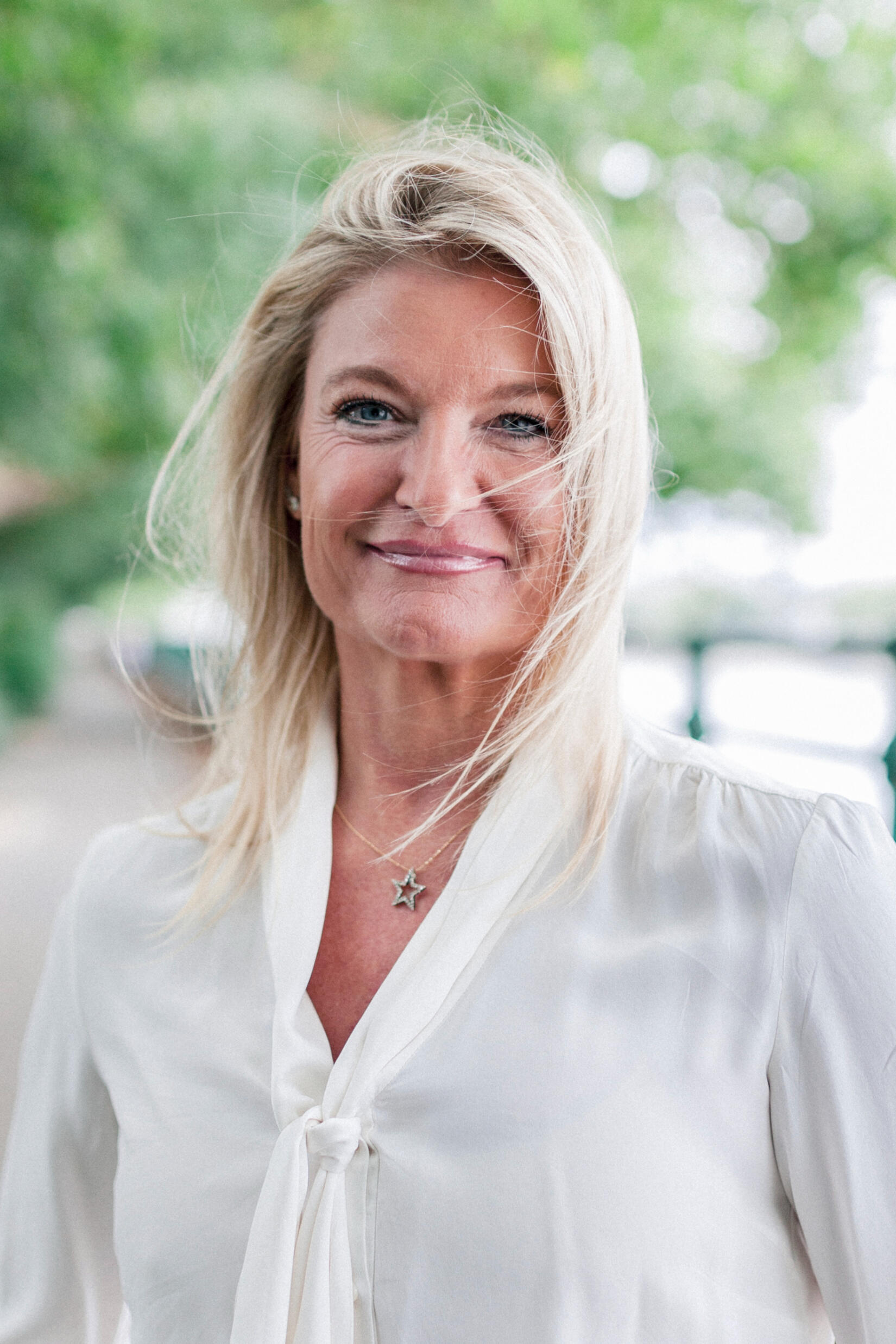
People ask me how I became a therapist more often than you might expect—usually during initial consultations, when they're curious, or sometimes halfway through their own therapy when something has shifted and they start wondering whether they could do this work too.
It's a good question. And if you're asking it yourself, there's probably a reason. You might be re-examining your career after a significant life event. Perhaps you've experienced therapy that changed you, and you want to offer that to others. Or maybe you've spent years in a caring role—nursing, teaching, social work—and counselling feels like the natural next step.
Whatever brought you here, the path to becoming a therapist in the UK is both more accessible and more demanding than most people realise. This guide covers what training actually involves, which qualifications matter, and what nobody tells you until you're already in it.
TL;DR: Key Takeaways
- There's no single route to becoming a therapist—multiple training pathways exist
- A minimum of three years of part-time study is typical for most recognised qualifications
- BACP or UKCP accreditation is the professional standard employers and clients look for
- Personal therapy is a requirement, not optional—most courses mandate 40–80 hours minimum
- The emotional demands of training are as significant as the academic ones
What Does a Therapist Actually Do?
Before we get into training, it's worth being honest about what the work involves day-to-day.
A therapist creates a private, confidential space where clients can explore whatever is causing them difficulty—whether that's anxiety, relationship patterns, grief, depression, low self-esteem, or the quieter sense that life isn't what it could be. The therapist doesn't advise, diagnose, or prescribe. Instead, they listen attentively, reflect back, and ask questions that help the client reach their own understanding.
It sounds straightforward. In practice, it requires a rare combination of qualities: genuine curiosity about people, tolerance of uncertainty, the capacity to sit with distress without rescuing, and enough self-awareness to keep your own material out of the room.
That last part—self-awareness—is why personal therapy is embedded into every reputable training programme. You can't reliably help someone else explore their patterns if you haven't examined your own.
Expert Perspective: "The best therapists I know aren't necessarily the ones with the most impressive academic records. They're the ones who've done their own work—who've sat with their own grief, their own avoidance, their own defences—and who can therefore sit with someone else's without flinching." — Sarah Williams, BACP-accredited supervisor and trainer
Understanding the Landscape: Different Types of Therapist
One source of confusion for people looking at training is that the titles "therapist," "counsellor," and "psychotherapist" are used somewhat inconsistently in the UK. Unlike medicine or nursing, therapy is not a statutorily regulated profession—meaning there's no single governing body whose approval is legally required to practise.
However, the voluntary registers are what matter professionally:
BACP (British Association for Counselling and Psychotherapy) is the largest professional body, with an accredited membership that signals professional standards and ethical accountability. If you're working in private practice or in organisations, BACP membership is the benchmark clients and employers typically look for.
UKCP (UK Council for Psychotherapy) tends to be associated with longer, more intensive training, often with a psychoanalytic or psychodynamic focus. UKCP registration generally requires at least four years of training, plus personal therapy and supervised hours.
BPS (British Psychological Society) is relevant if you're pursuing a psychology-based route, including clinical or counselling psychology, which requires a relevant undergraduate degree plus doctoral-level training.
For most people entering the profession, BACP accreditation is the starting point worth working towards.
The Typical Training Pathway
There isn't a single compulsory route—which can make research overwhelming—but most people follow a broadly similar progression.
Step 1: An Introduction to Counselling (3–6 months)
Many people begin with a short introductory course—often evenings or weekends—to get a feel for counselling theory and basic skills. Colleges and community organisations typically offer these, and they're accessible without prior qualifications.
This step isn't compulsory, but it's genuinely useful. Training at Level 3 or 4 moves quickly, and having some grounding in therapeutic concepts makes the jump considerably less steep.
Step 2: A Diploma or Degree in Counselling (2–4 years)
This is the substantive qualification. Most people pursue either:
- A Diploma in Counselling or Psychotherapy (typically Level 5 or 6, often part-time over 2–3 years)
- A BA or BSc in Counselling or a related discipline (3 years full-time or longer part-time)
A BSc, like the BSc (Hons) in Humanistic Counselling I completed at Metanoia Institute, offers not only professional qualification but also a grounding in research and theory that deepens your practice considerably. Metanoia's approach integrates person-centred, gestalt, and relational frameworks—which is why my practice draws on all three modalities.
Regardless of the specific course, look for programmes that are:
- BACP-accredited or BACP-listed (meaning the qualification is recognised towards eventual BACP accreditation)
- Clear about their theoretical orientation (humanistic, psychodynamic, integrative, CBT, etc.)
- Structured to include supervised client work as part of the course
Step 3: Supervised Placement and Clinical Hours
Training isn't only academic. To become BACP accredited, you'll need a minimum of 450 hours of supervised client contact (the requirement as of 2025). These hours are typically accumulated during and after your main qualification, through placements at agencies, charities, or employee assistance programmes.
Finding placement can be one of the most challenging aspects of training. Demand outstrips availability in many areas, and placements often involve waiting lists. Starting this process early—before you've finished your course—is worth doing.
Step 4: Personal Therapy
This isn't incidental. Most BACP-accredited programmes require you to be in personal therapy for the duration of training. The minimum hours vary by course, but 40 hours is common, with many programmes recommending significantly more.
This serves multiple purposes. It helps you experience the therapeutic relationship from the client's chair. It surfaces blind spots and unresolved material that might otherwise leak into your work with clients. And it models the kind of ongoing reflection that good practice requires.
Funding your own therapy during training—on top of course fees—is a real financial consideration. Budget for it from the start.
Step 5: Additional Training and Specialisation
Many therapists continue training throughout their careers. Short courses in specific modalities—Transactional Analysis, EMDR, trauma-informed practice—build on the foundational qualification and allow you to work with particular client groups or presentations more effectively.
I completed TA 101 certification through the Berne Institute, for example, which has significantly enriched how I understand script theory and relationship patterns in my work.
Choosing the Right Course
With so many options available, how do you narrow it down?
Questions Worth Asking Before You Enrol
What's the theoretical orientation? Understanding whether a course is primarily humanistic, psychodynamic, CBT-based, or integrative matters—not just academically, but because you'll be deeply immersed in this framework for years. Pick something that resonates with how you understand people and change.
Is it BACP-accredited or recognised? This is the single most important practical question. Check the BACP website directly—don't rely on a training provider's marketing claims.
What placement support is offered? Some courses have established links with agencies and will help you find supervised placement. Others leave this entirely to you. The difference matters enormously.
What are the hidden costs? Beyond course fees, factor in personal therapy (often ongoing throughout training), supervision once you have clients, DBS checks, professional insurance, and professional body membership.
How are students supported? Training stirs things up. The best programmes have clear pastoral support structures, not just academic ones.
What Nobody Tells You About Training
It will challenge you personally
The theoretical content—ego states, core conditions, the window of tolerance, defence mechanisms—is engaging and manageable. What catches people off guard is how personally demanding training becomes. You'll be asked to examine your own patterns in experiential group work, peer practice, and personal therapy. Parts of yourself you'd managed to keep at arm's length will be brought into view.
This is, of course, entirely the point. But it's worth knowing in advance.
You'll have more doubt than certainty
Good therapists are comfortable with not knowing. The instinct to fix, reassure, or provide answers—which many people bring into training—needs to be gently unlearned. Learning to tolerate uncertainty, to sit quietly with someone's distress without rushing to resolve it, takes years of practice.
The supervision never stops
Once qualified, regular clinical supervision isn't optional—it's an ethical requirement of BACP membership. This is a feature, not a bug. Supervision is how good practice is maintained, and it's also where some of the most valuable learning continues to happen. Budget for it as an ongoing professional cost.
The work is genuinely meaningful
All that said: when a client tells you, months into their therapy, that they finally understand something they've been carrying since childhood—that they've broken a pattern that was making their relationships impossible—there's nothing quite like it. The work matters in a way that's hard to describe unless you've done it.
FAQs: Becoming a Therapist in the UK
How long does it take to become a therapist? Most people take three to five years from starting their diploma to achieving BACP accreditation, depending on how quickly they accumulate supervised hours and whether they're studying part-time or full-time.
Can I study while working full-time? Yes. Most counselling diplomas are designed around part-time study—typically one or two days or evenings per week. The placement hours required can be more challenging to arrange around full-time work, but it's done regularly.
Do I need a psychology degree to train as a therapist? No. Many excellent therapists come from completely unrelated backgrounds. What most accredited programmes ask for is evidence of relevant experience—in a caring role, volunteering, or previous relevant study—and the capacity to engage in personal reflection.
What does counselling training typically cost? Diploma programmes typically cost between £5,000 and £15,000 in total, depending on the institution. Degree programmes are priced similarly to other undergraduate qualifications. Add ongoing personal therapy (roughly £60–90 per session), supervision once you're seeing clients, and professional membership fees.
Is therapy a good career change in your 40s or 50s? Genuinely yes. Many excellent therapists come to the profession later in life, bringing rich personal and professional experience that deepens their work. The profession doesn't skew young—emotional maturity is an asset, not a liability.
Where to Start
If you're seriously considering training, a few practical first steps:
- Research courses in your area using the BACP's CPD and training finder to identify BACP-recognised programmes
- Attend an open day or information session—most training organisations offer these, and they're an opportunity to ask specific questions and get a feel for the culture
- Consider a short introductory course if you haven't already, to test your interest before committing to a multi-year diploma
- Start your own therapy if you haven't yet—it will simultaneously help you understand the work from the inside and give you a sense of what kind of therapist you'd want to be
Becoming a therapist is not a quick path. It demands time, money, emotional courage, and sustained commitment. But for the right person, it's also one of the most meaningful things you can do with your working life.
Annabel is a BACP-registered integrative counsellor with a BSc (Hons) in Humanistic Counselling from Metanoia Institute. She practises in Fulham, SW London, and online via Zoom. Book a free 15-minute consultation to see whether therapy with Annabel might be right for you.
Related Topics:
Ready to start your therapy journey?
Book a free 15-minute consultation to discuss how we can support you.
Book a consultation→