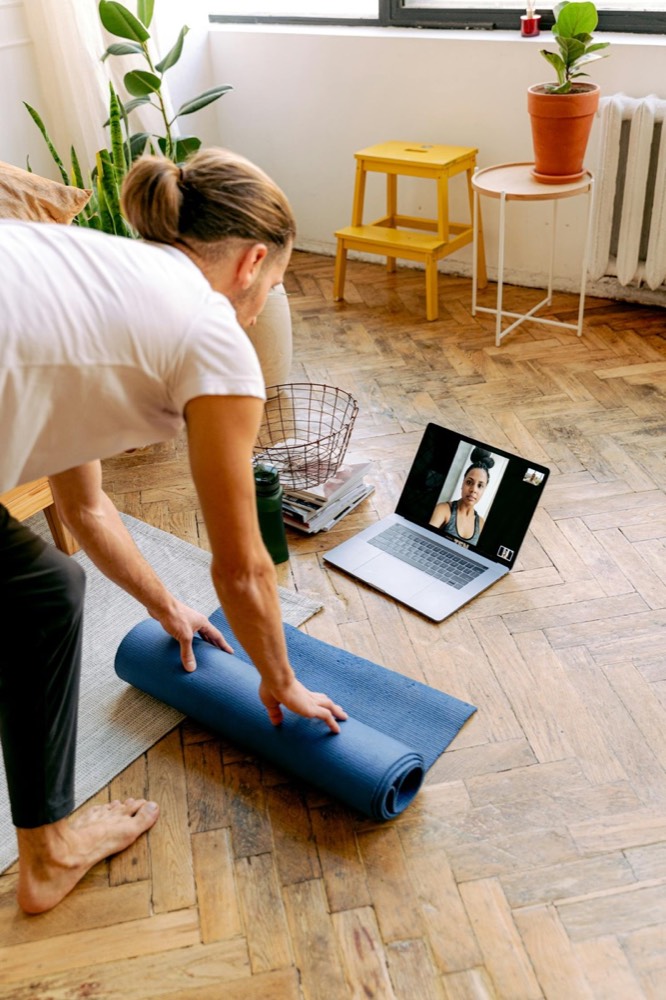
Online therapy got many people through the pandemic when there was no alternative. For some, it turned out to be a revelation—more convenient, more accessible, and surprisingly effective. For others, it worked but felt like something was missing. And for a quiet but significant group, it just didn't work at all.
The rise of video counselling has been genuinely positive for access to mental health support. But it's also generated a subtle, largely unspoken assumption: that online therapy is the default, and in-person is an old-fashioned alternative.
That framing undersells what face-to-face therapy actually offers—and why many people who have tried both actively choose to come to a therapy room.
TL;DR: Key Takeaways
- In-person therapy creates a distinct, bounded space that online sessions can't fully replicate
- Non-verbal communication and physical presence carry therapeutic information that video compresses
- The separation from daily life is itself part of the healing for many people
- Not all presentations suit online therapy equally—trauma, dissociation, and body-based work often benefit from in-person contact
- Finding an in-person therapist in London is straightforward; what matters most is the relationship, not the format
What Makes In-Person Therapy Different
The Therapy Room as a Separate World
There's something about physically going somewhere to do therapy that matters more than it might seem.
When you travel to a therapy appointment, you transition. You leave your home, your work, your daily context. You arrive somewhere that exists for one purpose: to be a safe space for you to explore what's going on. When the session ends, you leave—and that departure is also meaningful. The boundaries of the room contain the work in a way that helps it feel distinct from the rest of life.
When you do therapy from your kitchen table or your bedroom, those containers dissolve. Your life is right there. Your partner might be in the next room. You might take a work call an hour before your session. Many people find it genuinely harder to shift into a reflective state—to slow down and go inward—when the therapy is happening in the same space they use for everything else.
This doesn't make online therapy ineffective. But it does explain why many people find they go deeper, more quickly, in a physical therapy space.
Non-Verbal Communication: What the Camera Doesn't Catch
Therapy relies on information that isn't only carried in words.
A therapist working in the same room as you can notice: the slight shift in your posture when a particular subject comes up. The way your hands become still when you start talking about your father. The micro-expression that contradicts what you're saying. The quality of a silence—whether it's reflective or shut-down. The pace and rhythm of your breathing.
These aren't minor details. They're often the most clinically significant data in the room. And a video screen—even a high-quality one with a stable connection—compresses and loses much of this.
From the therapist's side, being in the same physical space also allows for greater attunement. The nervous system responds to the nervous system of another person in ways that a screen simply cannot replicate. This co-regulation—the way that being in the presence of a calm, attuned other helps settle our own physiology—is part of what makes therapy work, and it's most fully available in person.
Expert Perspective: "We are fundamentally relational, embodied beings. Therapy at its best involves two nervous systems in genuine contact. Video work has its place, but we should be honest that something real is absent when that contact happens through a screen." — Dr Mark Williams, UKCP-registered body psychotherapist and researcher
For Trauma and Body-Based Work
If you're working with trauma—particularly complex, developmental, or early-relational trauma—in-person therapy can be especially important.
Trauma is stored in the body as much as in narrative memory. Body-based approaches to trauma (somatic experiencing, sensorimotor psychotherapy, aspects of gestalt) require a physical presence to work with the felt sense of trauma in real time. Doing this work via screen is possible but limited.
More broadly, if you experience dissociation, strong anxiety, or struggles with emotional regulation, the physical presence of a therapist—their calm steadiness, the actual boundaries of the room—can help create the sense of safety that makes deeper work possible.
Containment and Confidentiality
For many people, finding a genuinely private space at home for therapy is difficult. Thin walls, noisy children, a flatmate in the next room—all of these make it hard to speak freely. The therapy room solves this. It is confidential by design.
There's also something about the protection of that confidentiality that allows people to go further than they might online. When you're in a private room with a therapist, you're in a different kind of trust than when you're sitting in your own home speaking into a laptop.
When Online Therapy Can Work Very Well
To be fair: online therapy is genuinely effective for many people and many presentations.
Research broadly shows that outcomes for online therapy are comparable to in-person for anxiety, depression, and many other common presentations. For people with disabilities, caring responsibilities, demanding work schedules, or who live in areas where good therapists are scarce, online therapy is an important option that extends access.
Online also works well for people who are already comfortable with vulnerability via screen, who have a genuinely private space at home, and who find the convenience meaningful—not just logistically, but as an expression of therapy fitting into their life rather than requiring a significant commitment of time and money to access.
The choice isn't binary, either. Some therapists offer hybrid formats—a mix of in-person and online sessions depending on the week. This can work well once a therapeutic relationship is established.
Finding an In-Person Therapist Near You in London
Where to Search
BACP Therapist Directory: The BACP's Find a Therapist tool allows you to filter by in-person availability and set a radius from your postcode. Most London practitioners who see clients in person will specify their location.
Psychology Today UK: Detailed profiles that include whether the therapist offers in-person sessions, their location, and in some cases photos of the therapy space.
Counselling Directory: Similarly useful for searching by location and format.
SW London and Fulham Specifically
If you're based in or near Fulham, Putney, Wandsworth, Chelsea, Hammersmith, or anywhere in SW London, there's a reasonably high density of private therapists offering in-person sessions.
For practical logistics: therapy rooms near Fulham Broadway, Parsons Green, and Putney Bridge tube stations are accessible from much of West and South West London. Sessions are typically 50 minutes, which makes them manageable within a lunch break or after-work slot for most people.
What to Ask When Making Contact
When you enquire with a therapist about in-person sessions, it's worth clarifying:
- Is the therapy room genuinely private? (A surprising number of therapists see clients in rooms that feel semi-public—hallways, home offices with thin walls)
- What are their session availability hours? (Many private practitioners in London work Monday–Friday, 9am–8pm, but this varies)
- Is there parking or nearby public transport? (Practical, but it affects your mental state before the session)
- Do they offer initial consultations in-person or only remotely? (Meeting them in the actual space before committing gives you useful information about fit)
In-Person vs. Online: Making the Right Choice for You
Neither format is universally better. The right choice is personal, and it may also depend on the specific work you're doing.
| Factor | In-Person | Online |
|---|---|---|
| Physical presence and co-regulation | Full | Limited |
| Non-verbal attunement | Full | Reduced |
| Containment and a distinct therapy space | High | Lower |
| Accessibility (scheduling, location) | Requires travel | Flexible |
| Privacy at home | N/A | Variable |
| Suitable for trauma/body-based work | Best | Limited |
| Suitable for general anxiety/depression | Excellent | Excellent |
| Cost difference | Variable | Often similar |
A few situations where in-person is particularly worth prioritising:
- You've tried online therapy and found yourself distracted, less open, or unable to settle into it
- You're dealing with trauma, dissociation, or want to do body-awareness work
- You don't have a genuinely private, quiet space at home for sessions
- You feel the ritual of travel and arrival matters to you
- You've never had therapy before and want the clearest possible container to start in
FAQs: In-Person Therapy
Is in-person therapy more expensive than online? Not necessarily. Many London therapists charge the same rate regardless of format. Where there is a difference, in-person may carry slightly higher room rental costs that are passed on, but this isn't universal.
What if I live far from a good therapist? London's public transport system makes it feasible to travel to therapy from a significant distance without it being impractical. Many people travel 20–30 minutes to reach their therapist, treating the journey as useful decompression time before and after sessions. If you're further out, a hybrid format—some sessions in person, some online—can work well.
Can I switch from online to in-person once therapy is established? Yes, and many therapists actively encourage this. Once you've established a therapeutic relationship online, meeting in person tends to deepen the work. Having a relationship already makes the transition to in-person feel less daunting.
Is in-person therapy safer for crisis situations? The research doesn't clearly support this, but many therapists feel more able to fully assess and respond to acute presentations in person. If you're dealing with a significant mental health crisis, discussing the format with a prospective therapist before starting is sensible.
Making the Decision
The format of therapy is genuinely less important than the quality of the therapeutic relationship. A mediocre in-person therapist will not serve you as well as an excellent online one.
But format matters. If you've been wondering whether in-person therapy might work better for you—if something about online sessions has felt off, or if you sense that the physical space would help you go deeper—that's worth trusting. Our instincts about what we need are often better than we give them credit for.
Annabel works in person from a private therapy room in Fulham, SW London, as well as offering sessions via Zoom. She sees clients Monday–Friday, 9am–8pm. Get in touch to arrange a free 15-minute consultation—in person or online, whichever suits you better.
Related Topics:
Ready to start your therapy journey?
Book a free 15-minute consultation to discuss how we can support you.
Book a consultation→