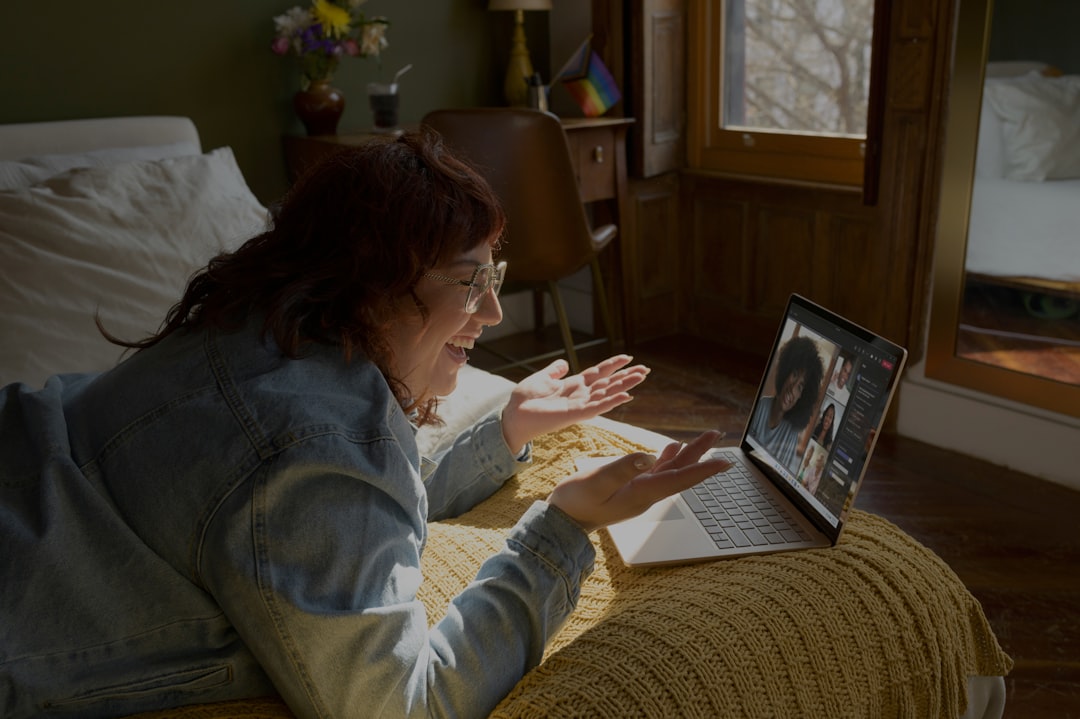

A few years ago, couples therapy online would have seemed like a significant compromise—a logistical workaround for people who couldn't access in-person support. The pandemic changed that assumption entirely. As millions of people received therapy remotely for the first time, the evidence began to accumulate: online therapy, including couples therapy, can be just as effective as in-person work.
This guide explains what online couples therapy involves in practice, what the research shows about its effectiveness, how it differs from in-person sessions (and whether those differences matter), and how to find a good online couples therapist in the UK.
What Online Couples Therapy Actually Involves
Online couples therapy is couples therapy delivered via video call—both partners joining the same video session with a therapist, from wherever they are. This might mean:
- Both partners sitting together in the same room at home, on a single device
- Both partners in the same house but in different rooms, each on their own device
- Partners in different locations entirely (for couples who live apart, or where one partner travels frequently)
Sessions typically follow the same structure as in-person couples therapy—usually 50–90 minutes, exploring whatever is most alive in the relationship, with the therapist facilitating, observing, and intervening as the work requires.
Some therapists offer hybrid models—some sessions in-person, others online—which can work well for couples who want occasional in-person connection with the therapist without the logistics of regular travel.
The Evidence: Does Online Couples Therapy Work?
The evidence for online therapy more broadly has grown substantially. Multiple meta-analyses now show that therapy delivered via video is not significantly less effective than in-person therapy for anxiety, depression, trauma, and other presentations. Client satisfaction is generally high, and dropout rates are comparable to in-person work.
For couples therapy specifically, the evidence is somewhat younger (because couples therapy online is a newer phenomenon) but broadly consistent. Studies published since 2020 show that:
- Couples report similar satisfaction with online therapy as with in-person therapy
- Therapeutic outcomes (relationship quality, communication, conflict resolution) improve comparably
- The working alliance—the quality of the relationship with the therapist—develops equivalently online
The common concern that therapy requires physical presence to be meaningful isn't well-supported by the evidence. What matters most—the quality of the therapeutic relationship, the skill of the therapist, the engagement of both partners—transfers to video.
How Online Couples Therapy Differs from In-Person
That said, online work does have some real differences:
What changes:
The therapist's physical presence: In-person, a therapist can sense the physical energy of the room—how people are sitting, what the body language says, the felt quality of the atmosphere. This information is somewhat reduced via video, particularly for therapists who rely heavily on somatic awareness. Good online therapists adapt by paying more careful attention to facial expression, voice, and visible body posture.
Nonverbal cues: Eye contact via video doesn't work the same way—looking at someone's eyes on screen means not looking at the camera, so direct eye contact isn't quite replicable. Experienced online therapists are accustomed to this and factor it in.
The environment is yours: Meeting in a therapist's consulting room is neutral ground, separate from everyday life. Online, you're in your home (usually), which has both advantages and disadvantages.
Tech factors: Poor internet connection, audio lag, or technical difficulties can interrupt sessions in ways that don't happen in person. Having a backup plan (a phone number to call if video fails) helps.
What stays the same:
- The quality of the therapeutic relationship
- The ability to have difficult conversations with skilled facilitation
- The techniques and frameworks the therapist uses
- The depth and relevance of the work
Advantages of Online Couples Therapy
Many couples actively prefer online therapy to in-person, for reasons that aren't just about convenience:
Logistics: Two people coordinating to attend regular appointments in a specific location is genuinely challenging. Online removes the commute, the parking, the synchronisation of two schedules to allow travel time. For couples with children, demanding jobs, or health constraints, this matters significantly.
Access to the right therapist: In-person therapy is constrained by geography. Online therapy means you can work with a therapist anywhere in the UK, giving access to practitioners with specific expertise, therapeutic approaches, or demographic understanding that might not be available locally.
Comfort: Being in a familiar environment can make difficult conversations slightly more accessible. Some couples find it easier to be honest when they're not navigating an unfamiliar clinical space.
Partners in different locations: For couples where partners travel, work in different cities, or live apart (long-distance relationships, separated parents who still want to work on co-parenting)—online is the only option that makes sense.
Reduced pressure: Some people find the slight physical distance of video reduces the physiological intensity of couple conflict, making it somewhat easier to stay regulated during difficult conversations.
Practical Considerations
Privacy: Sessions should take place somewhere private, where neither of you will be overheard. This is the most common practical challenge—partners need to be somewhere together where they can speak freely. If you have children, ensure childcare is arranged for the session time.
If partners are in different locations: Some therapists offer sessions where both partners join individually. This can work well, though the dynamic is somewhat different—the therapist may need to be more active in facilitating turn-taking.
Technology: A reliable internet connection and a reasonably good camera and microphone make a meaningful difference to session quality. Headphones can help with audio quality. Test the connection before your first session.
Which platform: Most therapists use a secure, GDPR-compliant video platform (not standard Zoom or FaceTime, which have privacy limitations). Ask your therapist what platform they use and ensure you're comfortable with it.
Finding a Good Online Couples Therapist in the UK
The same criteria that make a good couples therapist in-person apply online. Look for:
Specific training in couples work: Not every individual therapist is trained to work with couples. Ask about their specific training and experience in couples or relationship therapy.
BACP or UKCP registration: Professional registration means minimum training standards and ethical accountability.
Explicit experience working online: Most therapists now have online experience, but it's worth asking—and asking whether they've found online work creates any specific adaptations they make.
Relevant approaches: Emotionally Focused Therapy (EFT), Gottman Method, and integrative humanistic approaches are all delivered effectively online.
A compatibility with both partners: In couples therapy, the therapeutic alliance needs to work for both people. A brief initial consultation with both partners gives a sense of whether the therapist seems attuned to each person.
Directories for Finding Online Couples Therapists
- BACP Find a Therapist (www.bacp.co.uk): Filter by "couples" and "online"
- Counselling Directory (www.counselling-directory.org.uk): Detailed profiles, filterable by couples specialism and online availability
- Psychology Today UK (www.psychologytoday.com/gb): Filter by relationship issues and online availability
Questions to Ask a Potential Online Couples Therapist
- What experience do you have delivering couples therapy online?
- How do you adapt your approach for video sessions?
- What platform do you use, and how is it secured?
- What happens if the connection drops or there are technical issues?
- Do you offer any sessions in-person, or is the work fully online?
- What are your fees and availability?
When Online Couples Therapy May Not Be the Right Fit
For most couples, online work is entirely appropriate. There are some situations where in-person work may be preferable:
Domestic abuse or safety concerns: If there is coercive control, domestic violence, or safety concerns in the relationship, in-person therapy with careful assessment is more appropriate. The home environment may not be safe or private enough for online work in these situations.
Significant relationship crisis: Some couples in acute crisis benefit from the additional containment of a therapist's physical presence. If you're in a very acute phase—a recent disclosure of infidelity, an immediate decision about separation—an in-person session (if possible) may feel more grounding.
Strong preference for in-person: If one or both partners simply can't feel comfortable or present over video, this preference should be respected and an in-person therapist found.
For the majority of couples, though, the question isn't whether online therapy is adequate—it's whether you've found the right therapist, whether both partners are willing to engage, and whether you can create the conditions (privacy, reliability, regularity) that allow the work to develop.
I offer couples therapy and individual relationship work online and in-person in Fulham, SW6. Sessions are available at £80 per session, with a free 15-minute consultation for both partners to assess fit. Book your consultation here.
Related Topics:
Ready to start your therapy journey?
Book a free 15-minute consultation to discuss how we can support you.
Book a consultation→