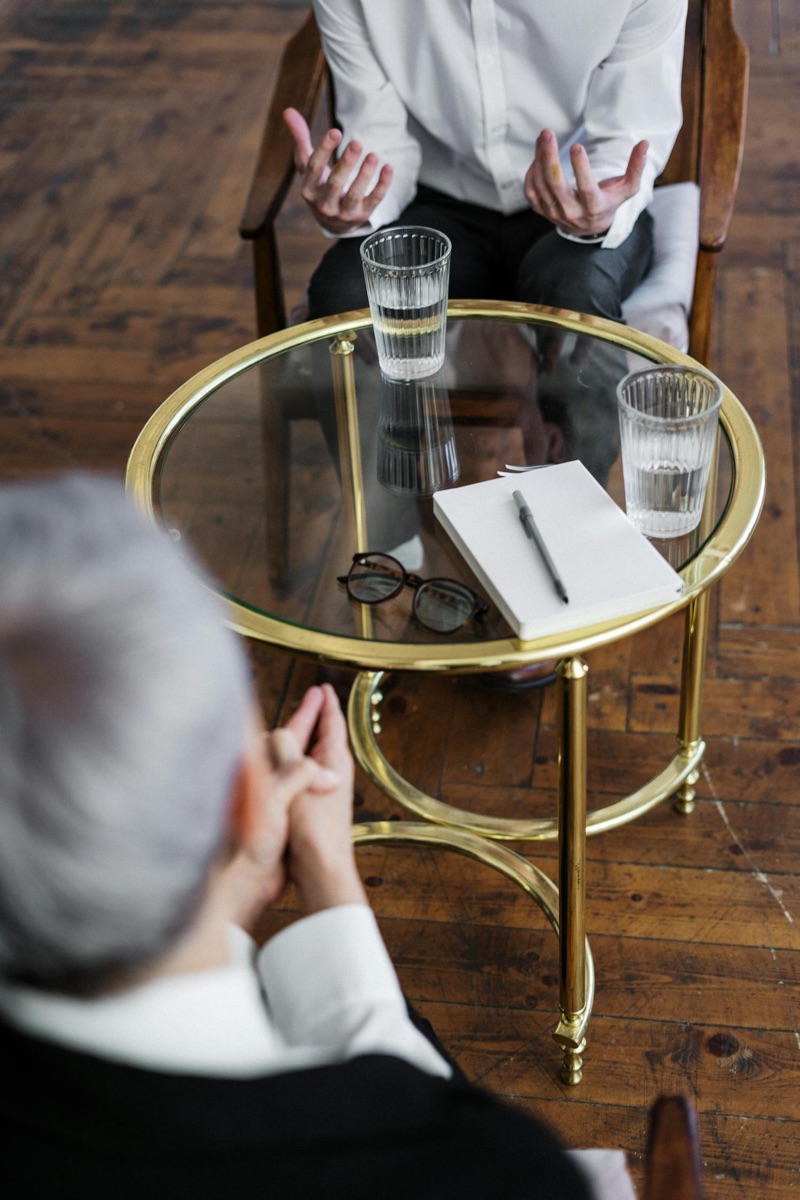

Here's something I notice in nearly every initial consultation for relationship work: people apologise for being there alone.
"I know I should probably be here with my partner," they say. Or: "I suppose I'm the problem." Or simply: "I don't know if this counts as relationship therapy if it's just me."
It counts. Overwhelmingly so.
Whether you're navigating a painful pattern with a partner, trying to understand why your relationships keep hitting the same walls, or working through a separation that's left you uncertain about who you are in relationship, individual relationship therapy is often exactly the right approach. And finding a relationship therapist near you—one who's the right fit—makes all the difference.
This guide covers how to find a relationship counsellor in London, what to look for, and how to know whether individual or couples therapy is the better starting point.
TL;DR: Key Takeaways
- Relationship therapy doesn't require a partner in the room—individual work on relationship patterns is often the most effective route
- The therapeutic relationship itself matters as much as the therapist's specific qualifications
- London has a wide range of relationship therapists, from general counsellors to specialist couples practitioners
- An initial consultation lets you assess fit before committing—treat it as a first date, not an interview
- The best relationship therapy explores not just what happened, but the patterns beneath it
What Is Relationship Therapy?
Relationship therapy is a broad term covering therapeutic work focused on how you relate to others. It includes couples counselling, but it extends well beyond that.
People seek relationship therapy for many reasons:
- Repeated patterns in romantic relationships they can't break
- Persistent conflict or emotional distance with a partner
- Difficulty forming or maintaining close friendships
- Complex family dynamics—with parents, siblings, adult children
- Recovery from infidelity, betrayal, or a painful breakup
- Understanding their own attachment style and how it shapes their relationships
- Loneliness and social disconnection
- Sex and intimacy difficulties within a relationship
What unites these is a focus on the relational. Rather than treating anxiety, depression, or low self-esteem in isolation, relationship therapy looks at how these experiences play out in the context of connection with other people.
Individual vs. Couples Relationship Therapy: Which Do You Need?
This question comes up a lot. The short answer: both are valid, and the right choice depends on your specific situation.
When Individual Relationship Therapy Makes Sense
When your partner isn't willing to attend. You can't drag someone into therapy, and trying to do so rarely works. If you're ready to do the work and your partner isn't, starting individually doesn't mean you're giving up on the relationship—it means you're taking responsibility for your part in it.
When you want to understand your own patterns. Perhaps you've been in several relationships that ended in similar ways. Perhaps you keep choosing partners who aren't quite available. Perhaps arguments with your partner follow such a familiar script you could recite both sides. Individual therapy is the space to explore where these patterns come from and what maintaining them gives you—even when it doesn't serve you.
When you're single and want to approach future relationships differently. Working on relationship patterns when you're not in a relationship can be extraordinarily productive. There's no immediate crisis to manage; you can explore at pace.
When you're in the aftermath of a relationship ending. Breakups and divorces benefit enormously from therapeutic support. Not just to process the grief, but to understand what the relationship was, what you brought to it, and what you want to bring to whatever comes next.
When one of you is dealing with something that needs individual focus. Trauma, addiction, depression, complex grief—these sometimes need to be addressed individually before couples work becomes productive.
When Couples Therapy Is the Better Starting Point
When both partners are willing and motivated. Couples work requires both people to engage honestly. If that's present, couples therapy can move relatively quickly.
When there's a specific relationship crisis. An affair, a major loss, a significant life change—where the couple relationship itself is what's in crisis.
When communication has genuinely broken down. When the two of you can't discuss the difficulty at all without escalation, having a skilled third party in the room changes what's possible.
It's also worth noting that these aren't mutually exclusive. Many couples do some individual work alongside couples sessions, or one partner starts individually and later the couple joins together. The structure can evolve as the work develops.
How to Find a Relationship Therapist in London
BACP Therapist Directory
The BACP's Find a Therapist tool lets you search by area and filter by specialisms. Search "relationship issues" or "couples counselling" within London, and filter by distance from your postcode.
SW London, in particular, has a good density of private practitioners—especially around Fulham, Putney, Wandsworth, and Chelsea.
Psychology Today UK
Psychology Today's UK directory has detailed therapist profiles, including described specialisms, theoretical approaches, and often a brief video introduction. This can help you get a feel for someone's personality before even making contact.
Counselling Directory
The Counselling Directory (counselling-directory.org.uk) is one of the UK's most comprehensive therapist listings, with the ability to filter by specialism, location, and session format (online or in-person).
Asking for Referrals
Your GP, a trusted friend, or a colleague who has been to therapy can all be valuable sources. Word of mouth doesn't guarantee a therapist is right for you, but it provides a starting point with some social endorsement.
What to Look for in a Relationship Therapist
The practical checklist matters—qualifications, accreditation, experience. But the interpersonal dimension matters just as much.
Qualifications and Accreditation
Look for a therapist who is:
- BACP-registered or accredited, or registered with another reputable body (UKCP, BPS)
- Trained in an approach that works well with relational material—humanistic, psychodynamic, integrative, or attachment-based approaches all have strong foundations for relationship work
- Experienced specifically with relationship presentations, not just generically. The BACP directory lets therapists list their specialisms, which is a useful first filter
Theoretical Approach
Not all therapy approaches are equally suited to relationship work. Some things to look for:
- Attachment-informed practice: Understanding how early attachment relationships shape adult relating is central to most good relationship therapy
- Relational or humanistic models: These tend to emphasise the therapeutic relationship itself as a vehicle for change—which is particularly relevant for relational work
- Transactional Analysis or Gestalt: Both are well-suited to understanding relationship patterns, the roles we unconsciously adopt, and the dynamics that keep us stuck
CBT can be helpful for specific relational behaviours (communication skills, conflict management), but for exploring the deeper patterns underneath—the why—a more relational approach tends to go further.
The Right Personal Fit
All the qualifications in the world don't mean much if you don't feel comfortable with the person.
Signs the fit might be right in an initial consultation:
- You felt genuinely heard, not just assessed
- They asked questions that opened things up rather than narrowing you into a diagnostic box
- There was warmth alongside professionalism
- You felt able to be honest, even about the less flattering parts of your situation
Signs to be cautious:
- They told you early on what they thought your problem was before hearing much from you
- You felt judged or dismissed
- The conversation felt transactional rather than genuinely curious
- Something just felt off—trust that
Expert Perspective: "The therapeutic relationship is not just the container for the work—it is the work. In relationship therapy especially, experiencing a genuinely safe, attuned relationship with the therapist is often what makes change possible. Everything else is scaffolding." — Dr Claire Noone, UKCP-registered relational psychotherapist
What to Expect in Relationship Therapy Sessions
The First Session
The first session is mostly the therapist listening. They'll ask you to describe what's brought you—your situation, what's been happening, what you're hoping therapy might offer. They may ask about relationship history, family background, significant losses. It can feel like a lot to cover.
It's also fine not to know exactly what you want from therapy. "I don't know, something has to change" is a perfectly valid starting point.
Ongoing Sessions
Sessions are usually 50 minutes, typically once a week (though fortnightly is common as therapy progresses). Over time, themes emerge: the recurring patterns, the unspoken assumptions about love and relationships that were formed in childhood, the ways you've learned to protect yourself that also keep you at a distance from connection.
Good relationship therapy doesn't only look backwards. It also works with what's happening in the present—including, sometimes, what's happening between you and the therapist. That moment when you notice yourself wanting to please them, or wanting to push them away, or suddenly feeling like you're performing—that's live material, and a skilled therapist will work with it.
How Long Does It Take?
There's no single answer. Focused work on a specific difficulty—a recent breakup, navigating a family conflict—might achieve meaningful change in 12–20 sessions. Deeper exploration of long-standing relational patterns often takes considerably longer. Most therapists will suggest a review point after the first six to eight sessions to assess how things are going and what ongoing work might look like.
Practical Considerations in London
Cost
Private relationship therapy in London typically ranges from £70 to £130 per session. Many therapists offer an initial free or reduced-cost consultation. Block booking discounts (five or ten sessions pre-paid) are available from some practitioners and can make ongoing work more financially accessible. Concessions for students, trainees, or those on lower incomes are worth asking about.
In-Person vs. Online
Both are available widely in London. In-person therapy has particular advantages for relationship work—the physical presence, the subtle non-verbal information, the distinct separation of the therapy space from everyday life. But online therapy is effective for many people, especially those with demanding schedules, and eliminates commuting time.
Some therapists in SW London offer both formats, allowing you to shift between the two depending on the week.
Location
If you're looking for a relationship therapist in Fulham, Chelsea, Putney, Wandsworth, or the surrounding SW London area, private practice density here is relatively high. Access from Parsons Green, Fulham Broadway, and West Brompton makes the area accessible from much of South West and West London.
FAQs: Relationship Therapy in London
Do I need to be in a relationship to do relationship therapy? No. Working on relationship patterns when you're single, or after a relationship has ended, is often highly productive. There's no crisis to manage in real time, which can allow for deeper reflection.
What if my partner refuses to come? This is very common. You can absolutely start individually—exploring your own patterns and responses—and couples work can be introduced later if circumstances change. Individual work often significantly improves relationship dynamics even without the partner attending.
Can one therapist work with both of us individually and as a couple? Generally, no. The dual relationship creates complexity that most ethical guidelines caution against. Most practitioners who do couples work will see the couple together, and individual clients may work with separate therapists.
How do I know if it's working? Progress in relationship therapy often doesn't look like immediate resolution. It can look like: noticing a pattern in the moment rather than only in retrospect; feeling slightly less reactive in a conflict; being able to articulate something you couldn't previously name; feeling more curious about yourself rather than just critical. These smaller shifts accumulate. A review conversation with your therapist after six to eight sessions is a good point to assess.
Annabel is a BACP-registered integrative counsellor specialising in relationship patterns, self-esteem, anxiety, and personal growth. She works in Fulham, SW London, and online. Individual relationship therapy is a particular focus of her practice. Book a free consultation to explore whether working together might help.
Related Topics:
Ready to start your therapy journey?
Book a free 15-minute consultation to discuss how we can support you.
Book a consultation→