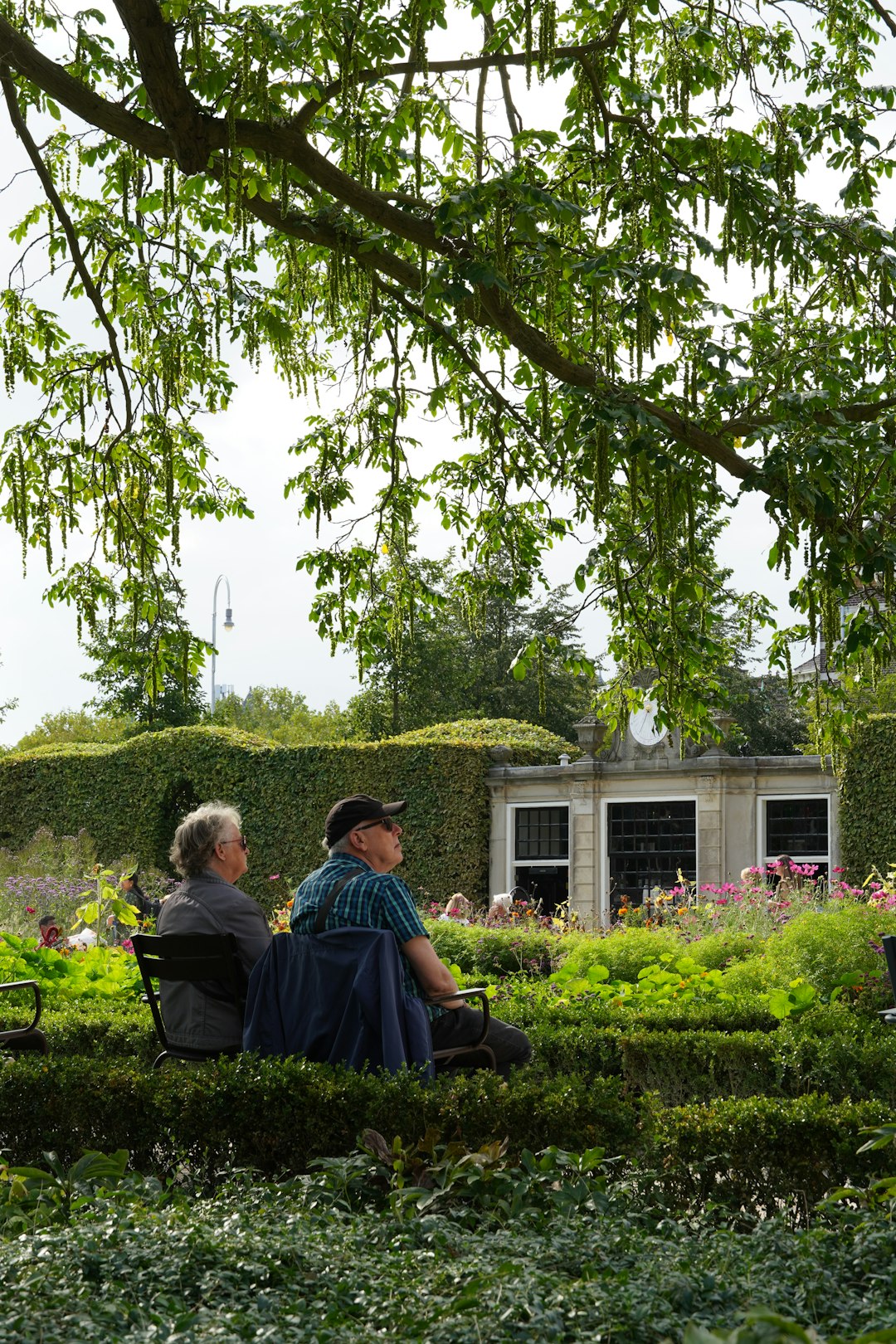

You counted down the days. You planned for decades. You imagined mornings with coffee, travel, time — the freedom to finally do exactly what you want. Then the day arrived, and within weeks you found yourself wondering: Who am I now?
Retirement is one of life's most significant transitions. And unlike bereavement, redundancy, or separation — transitions we at least recognise as potentially difficult — retirement comes wrapped in cultural expectation that it should feel wonderful. That ambiguity, between how it is supposed to feel and how it actually does, is often what brings people to counselling.
Key Takeaways
- Retirement represents a loss of identity, structure, purpose, and social connection — even when it is freely chosen
- Retirement depression is more common than widely acknowledged, particularly in the first year
- The transition challenges are distinct from financial concerns, and therapy addresses the psychological dimension
- Men and women often experience retirement differently, and couples frequently face relationship strain as retirement reorders household dynamics
- Humanistic and integrative therapeutic approaches are well suited to the identity-level work retirement requires
- The transition also holds significant opportunity — but accessing it requires processing the losses first
Why Retirement Is Harder Than Expected
Work provides far more than income. For most people who have built a working life, employment also provides:
Identity: "I am a solicitor." "I am a headteacher." "I am someone who builds things." For many people — particularly in cultures where work is a primary source of self-definition — retirement requires constructing a new answer to the question who am I? from scratch.
Structure: The shape of a working day is so habitual that most people do not realise how much psychological security it provides until it disappears. Without the routine of getting up for a purpose, many people find that time becomes shapeless in a way that produces anxiety rather than freedom.
Competence and mastery: Work is a place where most people are good at something. The daily experience of competence — solving problems, mentoring others, contributing expertise — is psychologically nourishing. Retirement can produce an abrupt discontinuity with that sense of capability.
Social connection: Colleagues are often underestimated as a source of social connection and belonging. Retirement can quietly remove what was, in practice, the primary social community in a person's life — particularly if friendships outside work were maintained less assiduously during busy working years.
Purpose and contribution: For many people, work is where they feel they matter to the world — where what they do affects outcomes and other people's lives. The loss of this can be experienced as a kind of erasure.
Research bears this out. Studies find elevated rates of depression in the first years following retirement — with one large UK study (using Health and Retirement Study data) finding that retirement increases the probability of clinical depression by around 40 per cent, and rates of physical health deterioration climbing accordingly.
This does not mean retirement is inherently bad. It means the transition is real and significant, and deserves to be treated as such.
The Identity Question at the Heart of Retirement
The deepest challenge most people bring to retirement counselling is the identity question — and it is one that our culture does not help with.
We live in a society where "what do you do?" is how we introduce ourselves. When the answer changes from a professional role to "I'm retired," something shifts — not just in how others perceive us, but in how we perceive ourselves.
For people who built identities around professional achievement, status, or the simple fact of being needed, retirement can feel like a kind of identity bereavement. Not a dramatic loss, but a quiet one — the gradual realisation that a chapter has ended before the next one is written.
Therapy creates space to grieve that ending properly, and to begin the work of finding what comes next — not by fabricating artificial "purpose" or filling every hour with activity, but by genuinely exploring what you value when work is no longer telling you the answer.
How Retirement Affects Relationships
Retirement rarely affects only the person retiring. Partners, family members, and friendships are all changed by it.
For couples where one or both partners retire, the reordering of household time and space can create friction that has nothing to do with the strength of the relationship. Suddenly spending twenty-four hours a day together — when both people were previously structured around separate routines — can surface dynamics that were previously managed by distance. "I married you for better or worse," the old joke goes, "but not for lunch every day."
More seriously: retirement can expose significant differences in interests, values, and expectations of the next life stage that were previously obscured by the shared structure of working life. Some couples use retirement counselling — individual or couples — to navigate these transitions consciously rather than reactively.
For people who are single, divorced, or widowed, retirement can amplify loneliness that was previously buffered by work. The social architecture of a working life, once removed, can leave a social vacuum that does not fill itself automatically.
Men and Retirement
Men are statistically more likely to experience significant psychological distress in retirement than women, for reasons that speak to how male identity is particularly concentrated in professional role and workplace community.
For many men — particularly those from generations where "real men work" was an unexamined cultural assumption — retirement can feel like a loss of masculine identity as much as a professional one. The role of provider, expert, leader, or competent professional is often where men have located their sense of worth.
Counselling for men around retirement often involves:
- Examining the inherited beliefs about identity and worth that retirement has disrupted
- Building new frameworks for self-definition that do not depend on occupation
- Addressing the social isolation that follows loss of workplace community
- Finding new arenas for competence, contribution, and meaning
- Navigating the relational shifts with partners and family that retirement brings
There is growing recognition in the UK of the relationship between male retirement, social isolation, and late-life depression — and of counselling as a practical response.
What Retirement Counselling Actually Looks Like
Retirement counselling is not fundamentally different from other life-transition work in therapy — but it has a specific shape shaped by the particular losses and possibilities involved.
A therapist working with someone navigating retirement is likely to:
Explore and honour what has been lost: Before turning to the question of what comes next, there is usually significant value in giving proper weight to what work provided and what retirement has ended. Many people, expecting to feel only relief, are surprised by grief — and the suppression of that grief, or the sense that they "should" feel better than they do, often prolongs the difficulty.
Examine the identity question: What beliefs about worth, usefulness, and identity have been inherited from work? How were those beliefs formed? Are they the only options?
Clarify values: When external structure falls away, what actually matters? This is a genuine question that many people have not needed to ask for decades — and one that retirement, for all its challenges, creates an opportunity to answer.
Support relationship adaptation: Retirement changes the relational landscape. Therapy can be a space to process those changes both individually and, where partners are involved, in conjunction with couples work.
Explore what comes next: Not in a prescriptive or cheerleading way — "you should volunteer!" or "why not take up golf?" — but by genuinely helping clients identify what draws them, what they are curious about, and what forms of connection and contribution feel meaningful.
Frequently Asked Questions
Q: I feel guilty about struggling with retirement — people would give anything to be in my position. Is that normal? A: Extremely common. The social expectation that retirement is purely positive makes it harder to acknowledge the genuine difficulties. The feelings are real regardless of how they "should" be, and they deserve attention.
Q: My partner retired easily — why am I finding it so hard? A: People's relationship to work and identity varies enormously. Factors like whether retirement was chosen or imposed, how closely work was tied to identity, the strength of existing social networks, and underlying personality all affect how the transition lands. One person's easy transition does not mean another's difficulty is unusual or self-created.
Q: Can retirement counselling help if I retired years ago but have never really settled? A: Yes. The transition challenges do not automatically resolve with time. Many people carry unacknowledged grief and identity disruption for years without recognising it as a response to the retirement transition.
Q: I'm approaching retirement — should I start counselling beforehand? A: Preemptive therapeutic work around retirement can be genuinely useful. Exploring your relationship to work, identity, and the transition before it happens often makes the transition itself smoother.
The Bottom Line
Retirement is a genuine ending — and endings, even chosen ones, deserve to be grieved as well as celebrated. The cultural pressure to feel only gratitude for the freedom retirement brings can prevent people from doing the honest psychological work that the transition requires.
Therapy offers a space to acknowledge what has been lost, examine what the working years meant, and begin the genuine — not performative — process of finding what comes next. The second half of life holds its own particular richness. Counselling can help you find your way to it.
At Kicks Therapy, we work with significant life transitions using integrative humanistic approaches. If retirement has left you feeling unmoored, a free 15-minute introductory call can help you explore whether therapy might support you.
Sessions available in-person in Fulham (SW6), online throughout the UK, and through walking therapy in South West London.
This article is for informational purposes and does not replace professional mental health advice.
Related Topics:
Ready to start your therapy journey?
Book a free 15-minute consultation to discuss how we can support you.
Book a consultation→