
Social Anxiety: How Therapy Can Help You Find Your Voice
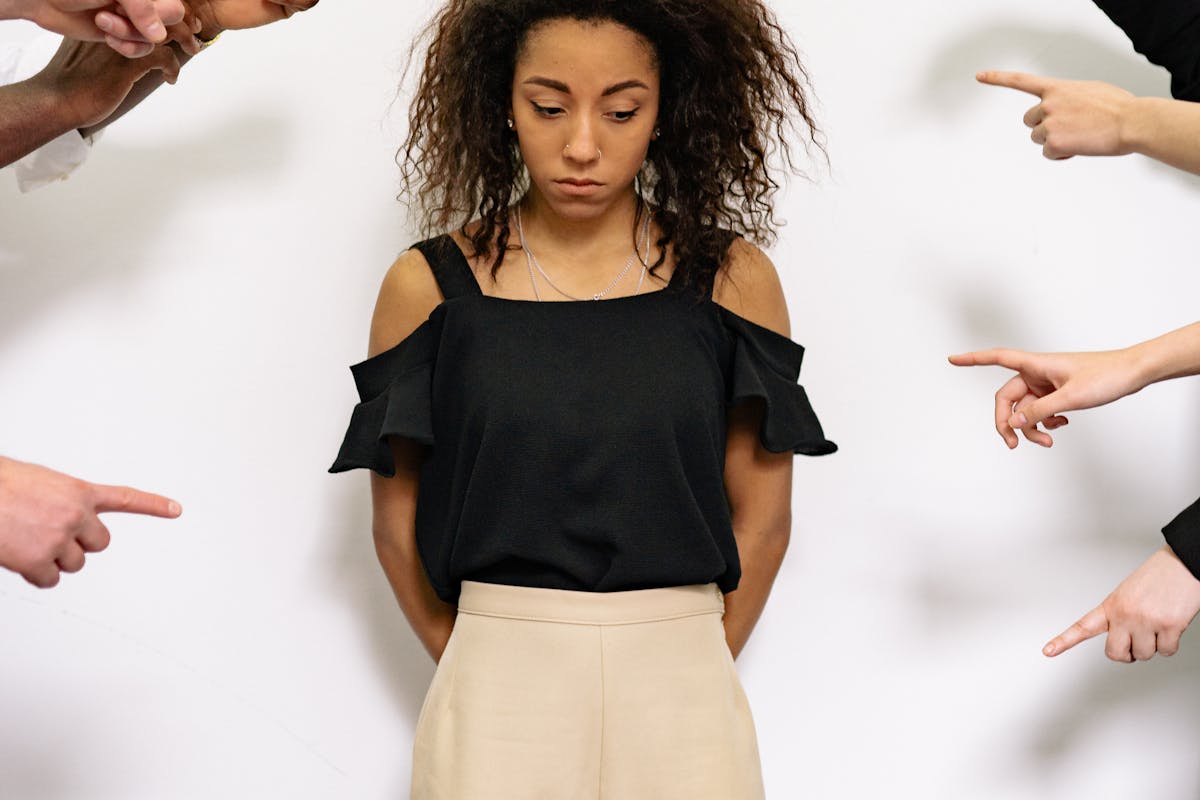
The invitation arrives. A party, a work event, a casual gathering. Immediately, your stomach tightens. You start rehearsing conversations that haven't happened yet, imagining yourself saying something stupid, being judged, standing awkwardly alone. By the time the event comes around, you've convinced yourself everyone would be better off if you just didn't go.
Social anxiety isn't simply shyness or preferring solitude. It's an intense fear of social situations driven by the conviction that you'll be negatively evaluated, embarrassed, or rejected. It can make ordinary interactions—meeting new people, speaking in meetings, eating in public, even just walking past a group of people—feel genuinely threatening.
If you've lived with social anxiety for years, you might assume it's just who you are: "I'm not good with people." But social anxiety isn't a fixed personality trait. It's a learned pattern of thinking and responding—which means it can be unlearned. Therapy offers practical, evidence-based ways to reduce social anxiety and develop the confidence to engage with others more freely.
This guide explores what maintains social anxiety, how therapy addresses it, and what the process of building social confidence actually looks like.
Table of Contents
- Understanding Social Anxiety: More Than Shyness
- What Maintains Social Anxiety
- How Therapy Helps
- Therapeutic Approaches for Social Anxiety
- What Social Anxiety Therapy Looks Like
- Building Social Confidence Gradually
- When Medication Might Help
- Frequently Asked Questions
Understanding Social Anxiety: More Than Shyness
Social anxiety disorder (also called social phobia) affects around 1 in 10 people in the UK at some point in their lives. It ranges from specific fears (like public speaking) to generalised social anxiety affecting most interpersonal situations.
Common Social Anxiety Triggers
- Speaking in front of groups
- Meeting new people
- Being the centre of attention
- Eating or drinking in public
- Using public toilets
- Entering rooms where people are already seated
- Making phone calls
- Asking questions or expressing opinions
- Being watched while doing something
- Small talk and casual conversation
Physical Symptoms
Social anxiety isn't just mental—it produces intense physical reactions:
- Blushing or feeling face heat up
- Trembling hands or shaky voice
- Sweating
- Rapid heartbeat
- Nausea or stomach churning
- Mind going blank
- Difficulty making eye contact
These physical responses then become part of what you fear: "What if people notice I'm shaking?" "What if I blush?" This creates a vicious cycle where fear of the anxiety symptoms themselves increases the anxiety.
The Difference from Shyness
Shyness is a personality trait involving initial reserve with new people. It doesn't typically cause significant distress or life limitation. Social anxiety, by contrast, involves:
- Intense fear disproportionate to actual threat
- Avoidance of situations or enduring them with severe distress
- Significant impact on work, relationships, or quality of life
- Recognition that the fear is excessive (though this doesn't reduce it)
What Maintains Social Anxiety
Understanding what keeps social anxiety going is key to addressing it effectively. Several interlocking factors typically maintain the problem:
Safety Behaviours
These are subtle things you do to try to prevent feared outcomes:
- Over-preparing what you'll say
- Avoiding eye contact
- Speaking very quietly or very little
- Standing at the edge of groups
- Using alcohol before social events
- Bringing a "safe person" along
- Checking your appearance repeatedly
- Keeping your hands hidden (to avoid visible shaking)
Safety behaviours feel helpful in the moment, but they actually maintain anxiety by preventing you from discovering that the feared outcome (rejection, humiliation, awkwardness) wouldn't actually happen, or wouldn't be catastrophic if it did.
Avoidance
The most powerful maintainer of social anxiety is avoidance. When you avoid a feared situation, you get immediate relief—which negatively reinforces the avoidance. But you never learn that the situation was manageable, so the fear persists or even grows.
Avoidance can be obvious (turning down invitations, calling in sick) or subtle (arriving late so you don't have to mingle, staying busy on your phone, volunteering for tasks that remove you from interaction).
Self-Focused Attention
In social situations, people with social anxiety tend to focus intensely inward: monitoring their own anxiety symptoms, critiquing their performance in real-time, imagining how they appear to others. This leaves little attention available for actually connecting with people, which ironically makes interactions more awkward.
Post-Event Rumination
After social events, you might replay the interaction endlessly, zeroing in on perceived mistakes or awkward moments whilst dismissing anything that went well. This rumination reinforces the belief that you performed badly and strengthens anxiety about future situations.
Negative Core Beliefs
Underlying social anxiety are often beliefs like:
- "I'm boring/awkward/weird"
- "People will reject me if they see the real me"
- "I'm fundamentally defective"
- "I have nothing interesting to contribute"
- "People are judging me constantly"
These beliefs feel like facts rather than thoughts, shaping how you interpret social situations and respond to others.
How Therapy Helps
Therapy for social anxiety works by addressing the maintaining factors systematically:
Breaking the Avoidance Cycle
The core of most social anxiety treatment involves gradually facing feared situations rather than avoiding them. This isn't about forcing yourself into terrifying situations unprepared—it's a structured process of building up your tolerance whilst learning that feared outcomes rarely occur, and when they do, you can cope.
Challenging Beliefs
Therapy helps you examine the thoughts driving social anxiety: "Everyone will think I'm stupid," "If I blush, people will judge me," "I can't handle awkwardness." Through gentle questioning and behavioural experiments, you test whether these beliefs are actually accurate.
Shifting Attention
You learn to redirect attention outward—toward the conversation, the environment, other people—rather than monitoring yourself. This alone often significantly reduces anxiety and paradoxically improves social performance.
Developing Social Skills
Sometimes social anxiety is maintained by genuinely lacking confidence in particular skills: starting conversations, asserting yourself, handling disagreement. Therapy can include practicing these skills in a safe environment.
Building Self-Acceptance
Humanistic approaches work on the underlying self-judgement that fuels social anxiety. As you develop self-acceptance and self-compassion, the terror of being judged by others naturally decreases. You become less dependent on others' approval because you're not constantly judging yourself as inadequate.
Therapeutic Approaches for Social Anxiety
Different approaches address social anxiety from different angles:
Cognitive Behavioural Therapy (CBT)
CBT for social anxiety is highly structured and well-researched. It typically involves:
- Cognitive restructuring: Identifying and challenging anxious thoughts
- Behavioural experiments: Testing out feared predictions in real situations
- Graded exposure: Gradually facing feared social situations in a hierarchy from least to most anxiety-provoking
- Attention training: Learning to focus outward rather than on internal experience
- Video feedback: Sometimes watching recordings of yourself to reality-test your fears about how you come across
CBT usually involves homework between sessions: practicing exposures, monitoring thoughts, experimenting with dropping safety behaviours.
Best for: People who want structured, time-limited treatment with clear techniques and measurable progress.
Humanistic and Person-Centred Therapy
Humanistic approaches work with social anxiety by addressing the shame and self-judgement underneath it. Through experiencing unconditional positive regard from your therapist, you gradually internalise a less critical, more compassionate stance toward yourself.
The therapeutic relationship itself becomes a safe social space where you can practice being seen, being authentic, and discovering you're acceptable as you are. As your core sense of worth strengthens, the fear of others' judgement naturally reduces.
Best for: People whose social anxiety is rooted in shame, perfectionism, or early experiences of criticism or rejection, and who want deeper relational healing rather than purely symptom-focused work.
Acceptance and Commitment Therapy (ACT)
ACT doesn't focus on reducing anxiety itself but on changing your relationship with it. Rather than fighting anxiety or trying to eliminate it, you learn to make space for uncomfortable feelings whilst moving toward what matters to you (valued social connections).
You practice "defusion"—observing anxious thoughts as mental events rather than truths—and mindful presence with physical anxiety sensations.
Best for: People who've tried to "fix" their anxiety without success and are interested in a radically different approach focused on acceptance and values.
Group Therapy
Specially designed group therapy for social anxiety might sound like torture, but it's actually highly effective. The group itself becomes a safe laboratory for practicing social skills, receiving feedback, and discovering you're not alone in these struggles.
Best for: People ready for a more intensive, experiential approach (usually after some individual therapy foundation).
What Social Anxiety Therapy Looks Like
While every therapy is unique, here's a general sense of what working on social anxiety might involve:
Early Sessions: Understanding Your Pattern
You'll explore your specific social anxiety: which situations trigger it, what you fear will happen, what you do to cope, how it's affecting your life. Your therapist helps you make sense of the pattern without judgement.
Many people feel relief in these early sessions simply from having their experience normalised and taken seriously.
Building Skills and Awareness
You'll likely work on:
- Recognising anxious thought patterns as they arise
- Learning techniques for managing physical anxiety (breathing, grounding)
- Practicing shifting attention from self-monitoring to present-moment engagement
- Understanding your personal safety behaviours
Gradual Exposure
The heart of treatment usually involves gradually facing feared situations:
Imaginal exposure: First, you might practice in imagination or role-play within sessions.
In-session exposure: Your therapist might gently push you slightly outside your comfort zone within sessions—maintaining eye contact, speaking up even when anxious, tolerating silence.
Real-world experiments: You'll design specific experiments to try between sessions: initiating a conversation, asking a question in a meeting, going to a social event without your usual safety person.
These aren't about proving you're brave or forcing yourself to "just do it." They're carefully calibrated experiments where you learn through experience that your feared catastrophes rarely happen, and when awkwardness occurs, you survive it.
Processing and Adjusting
After each experiment, you process what happened: What did you notice? What went differently than expected? What did you learn? This reflection consolidates the learning.
Consolidation
As confidence builds, the focus shifts to maintaining gains, handling setbacks, and continuing to expand your comfort zone independently.
Building Social Confidence Gradually
Progress with social anxiety isn't linear. Here's what realistic improvement looks like:
Early Signs of Progress
- Agreeing to attend one event you'd normally avoid
- Speaking up once in a meeting
- Making brief eye contact during conversation
- Trying one social interaction without excessive preparation
- Noticing the anxiety without it immediately controlling your behaviour
Middle-Stage Progress
- Attending social events more regularly (even if still uncomfortable)
- Initiating conversations occasionally
- Tolerating awkward moments without catastrophising
- Recovering more quickly after perceived social mistakes
- Beginning to enjoy some social interactions
Longer-Term Changes
- Choosing activities based on interest rather than anxiety
- Spontaneous social confidence emerging
- Caring less about others' judgements
- Authentic self-expression increasing
- Social connection feeling nourishing rather than draining
Progress isn't about becoming the most outgoing person in the room. It's about anxiety no longer dictating your choices, and social interaction feeling manageable rather than threatening.
When Medication Might Help
For some people, social anxiety is severe enough that psychological therapy alone feels overwhelming. In these cases, medication can be a helpful adjunct:
SSRIs (Selective Serotonin Reuptake Inhibitors)
Medications like sertraline or paroxetine are sometimes prescribed for social anxiety disorder. They can reduce baseline anxiety levels, making it easier to engage with therapy and exposure work.
Medication isn't a cure, but it can provide enough relief that you're able to do the therapeutic work that creates lasting change.
Beta-Blockers
For specific performance situations (presentations, interviews), some people use beta-blockers to reduce physical symptoms (shaking, rapid heartbeat). These don't address the underlying anxiety but can provide short-term relief for high-stakes situations.
Medication + Therapy
Research consistently shows that combining medication with psychological therapy (particularly CBT) is more effective than either alone for moderate to severe social anxiety. The medication provides space to practice new behaviours; the therapy builds lasting skills and confidence.
Frequently Asked Questions
How long does therapy for social anxiety take?
CBT for social anxiety typically runs 12-20 sessions, though some people need less and others benefit from more. Humanistic approaches tend to be open-ended. Many people notice meaningful improvement within 3-4 months, with continued gains over 6-12 months.
Do I have to do exposure therapy?
Gradual exposure to feared situations is the most evidence-based component of social anxiety treatment. However, it's always done collaboratively at a pace you can manage. If the idea feels intolerable, discuss this with your therapist—there are usually ways to approach it more gently.
Will therapy make me an extrovert?
No. Therapy doesn't change your basic personality or preference for solitude. It aims to give you choice: you can engage socially when you want to, rather than anxiety making that choice for you. Many introverts successfully treat social anxiety whilst remaining happily introverted.
What if I'm too anxious to even start therapy?
This is common. Remember that therapists specialising in anxiety expect clients to feel nervous. The first session can be conducted by phone or video if that feels easier. A good therapist will go at your pace and won't push you into anything uncomfortable immediately.
Can social anxiety be cured?
Many people achieve substantial, lasting improvement to the point where social anxiety no longer limits their lives. Whether this counts as "cured" varies—some people remain somewhat more socially cautious than the average person, but it no longer causes distress or avoidance.
What if I've had social anxiety my whole life?
Long-standing social anxiety can still improve with treatment. It may take longer and require more therapeutic work, but people who've struggled for decades can still develop meaningful social confidence.
Will I have to join a group?
Not unless you want to. Individual therapy is perfectly effective for social anxiety. Group therapy is an option some people choose later once they've built some foundation of skills and confidence.
Finding Your Voice
Social anxiety isn't a character flaw or something you should just "get over." It's a genuine psychological difficulty that developed for understandable reasons—perhaps early experiences of being judged, bullied, or criticised; perhaps a naturally sensitive temperament combined with difficult social experiences; perhaps perfectionism and self-judgement that got applied to social performance.
Whatever its origins, social anxiety can change. Therapy offers proven pathways to reduce avoidance, challenge distorted beliefs, build social skills and confidence, and ultimately develop a freer, more authentic way of relating to others.
You don't need to become someone you're not—loud, constantly social, the life of the party. You just need to reach a point where anxiety isn't making your decisions for you, where you can engage when you want to and express yourself without terror, where connection feels possible rather than threatening.
If social anxiety has been limiting your life—the jobs you apply for, the relationships you pursue, the experiences you allow yourself—therapy can help you reclaim that territory. Not by becoming fearless, but by developing the confidence to move forward even when fear is present.
For humanistic, integrative therapy addressing social anxiety in London, particularly South West London including Fulham, Chelsea, and Putney, contact Kicks Therapy to arrange an initial consultation. We offer both in-person and video sessions, working at your pace to help you build genuine social confidence rooted in self-acceptance.
About the Author: This article was written by the Kicks Therapy Content Team, with clinical input from BACP-registered therapists experienced in treating social anxiety and related difficulties.
Further Reading:
- Signs You Need Anxiety Therapy
- Finding a Therapist for Anxiety and Depression
- Building Confidence Through Therapy
- Understanding Humanistic Therapy
Expert Sources:
- National Institute for Health and Care Excellence (NICE). (2013). Social anxiety disorder: Recognition, assessment and treatment. https://www.nice.org.uk/
- Clark, D. M., & Wells, A. (1995). A cognitive model of social phobia. In Social Phobia: Diagnosis, Assessment, and Treatment. New York: Guilford Press.
- British Association for Counselling and Psychotherapy (BACP). (2024). Working with social anxiety. https://www.bacp.co.uk/
Related Topics:
Ready to start your therapy journey?
Book a free 15-minute consultation to discuss how we can support you.
Book a consultation→