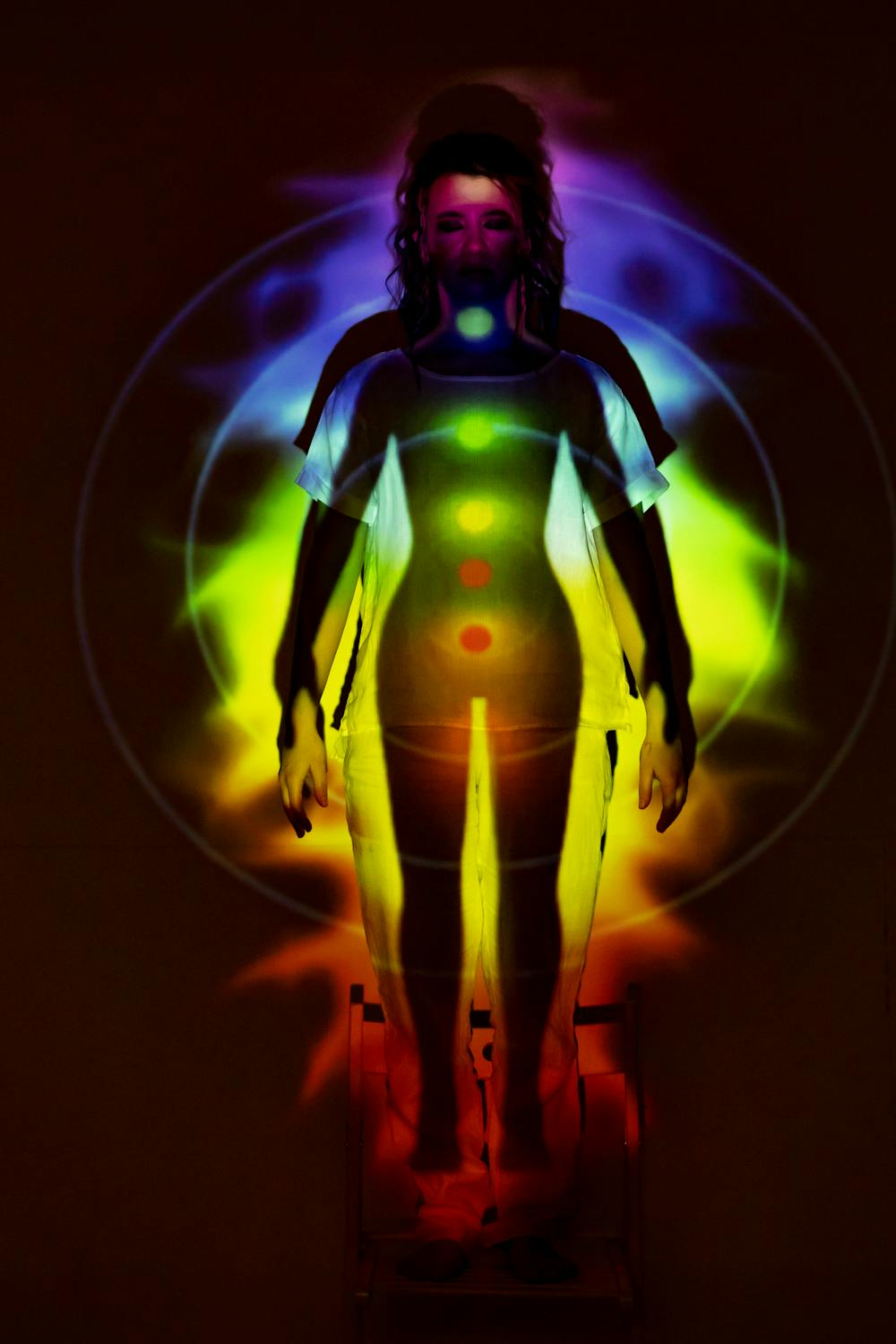

The diagnosis changed everything. Not just physically—though of course that—but who you thought you were, what you planned, what your body would let you do. The future you'd imagined quietly dissolved. And nobody really talks about that part.
Medical appointments are short, focused, and mostly about your body. There's rarely time for the question of what it's actually like to live inside that body now. To have your plans derailed. To watch your identity shift. To feel the anger, and then the guilt about the anger, and then the exhaustion of it all.
Therapy was designed for exactly this.
Therapy for Chronic Illness: Supporting Mental Health with Physical Conditions
Contents
- The Mental Health Impact of Chronic Illness
- The Grief of Chronic Illness
- Why Medical Appointments Don't Address This
- What Chronic Illness Therapy Addresses
- Conditions That Often Benefit from Therapy
- Therapeutic Approaches Suited to Chronic Illness
- Practical Considerations
- The Mind-Body Connection
- Frequently Asked Questions
The Mental Health Impact of Chronic Illness
The statistics are striking, though perhaps unsurprising when you sit with them. Approximately 30–40% of people living with chronic physical conditions also experience clinically significant depression or anxiety. Research from the Mental Health Foundation suggests that people with long-term physical conditions are twice as likely to experience mental health difficulties as the general population.
The relationship is bidirectional. Mental health difficulties can worsen physical symptoms—through mechanisms including increased inflammation, disrupted sleep, reduced immune function, and reduced adherence to medical treatment. And chronic physical illness reliably creates psychological strain, through pain, loss, uncertainty, and the profound disruption of living a life that no longer resembles the one you expected.
Yet mental health support for people with chronic conditions remains inconsistently available and inadequately integrated into physical healthcare. Many people living with long-term conditions struggle for years before finding their way to counselling—often because no one in their medical care thought to mention it, or because they felt their psychological response wasn't "bad enough" to justify seeking support.
It is.
The Grief of Chronic Illness
One of the things that people with chronic illness most often find helpful to hear in therapy is this: what you're experiencing is grief. Real, legitimate grief—not weakness, not catastrophising, not failure to cope.
Chronic illness brings not one loss but multiple, often overlapping losses:
Loss of the body you knew: The body that moved without pain or limitation, that could be relied upon, that felt like yours in a way that's harder to access now.
Loss of the future you planned: The career path, the travel, the family plans, the ambitions—all now filtered through the lens of what's possible with this condition. Some plans are simply gone. Others require painful renegotiation.
Loss of independence: Depending on others, needing accommodations, not being able to do what you once could without help or consequence.
Loss of identity: For many people, how they functioned—their professional role, their physical activities, their energy for relationships—was central to who they were. When illness changes these, identity shifts with them.
Loss of certainty: Chronic illness introduces a level of unpredictability that healthy people often take for granted. Will I be well enough for this? What if I have a flare? Can I commit to this plan?
This is grief in the fullest sense, but without many of the social rituals and support systems that attend more recognised losses like bereavement. People often don't know they're allowed to grieve. They've been told—or have told themselves—to be grateful it's not worse, to focus on what they can do, to stay positive.
All of that may be true. And grief is also true, simultaneously.
Why Medical Appointments Don't Address This
GPs and hospital consultants work under profound time pressure. A standard GP appointment is ten to twelve minutes. Hospital appointments, even in specialist clinics, rarely involve extended emotional inquiry. The focus is, appropriately, clinical: diagnosis, treatment, monitoring, medication.
Mental health isn't often explicitly asked about. When it is, it's frequently via a brief screening question whose positive answer leads to a waiting list, not to dedicated psychological support.
There's also a cultural dimension. Medicine has long operated with an implicit separation between mind and body—despite the evidence for their integration—and this shapes clinical culture. Physical illness is treated physically. Psychological distress, when acknowledged at all, is often treated as a separate and secondary concern.
The result is that people living with chronic illness receive excellent (or at least structured) support for their physical symptoms, and very little support for the psychological experience of living with those symptoms. Therapy fills that gap.
What Chronic Illness Therapy Addresses
A skilled therapist working with someone who has a chronic illness can address a wide range of experiences. These aren't exhaustive—everyone's situation is different—but they give a sense of the territory:
Adjustment and ongoing grief: Processing the losses that accompany chronic illness, including the layered, non-linear grief that most people don't recognise as grief.
Anger and resentment: The rage—often followed by guilt—about being ill. Why me? What did I do wrong? The resentment towards people who are well, towards those who don't understand. These are entirely normal responses that often have nowhere safe to be expressed.
Identity reconstruction: Working through who you are now, in relation to an illness that has changed significant aspects of how you live and function. Building a self-concept that is honest about limitation without being entirely defined by it.
Relationships and illness: Chronic illness changes relationships, often in ways that are painful for everyone involved. Therapy provides space to think about dependency, roles, intimacy, and how to communicate needs and limits to people you love.
Health anxiety and symptom focus: Many people with chronic illness develop anxiety around symptoms—sometimes helpfully vigilant, sometimes tipping into hypervigilance that makes every bodily sensation frightening. Therapy can help recalibrate this.
Guilt about being ill: Guilt is almost universal among people with chronic illness, and it's rarely spoken. The guilt of not working at full capacity, of needing adjustments, of being a burden, of not recovering faster. All of this can be examined and gently challenged in therapy.
Navigating the healthcare system: Not strictly therapeutic work, but many people with chronic illness find it enormously useful to have a space to process their experiences with healthcare—the appointments that felt dismissive, the diagnoses that took years, the treatments that didn't work—and the associated emotions of hope, disappointment, anger, and exhaustion.
Finding meaning and quality of life: Ultimately, therapy for chronic illness is often about building a life that feels worth living, not despite limitation but within it—finding what genuinely matters and how to pursue it with the body and energy you actually have.
Conditions That Often Benefit from Therapy
Therapy can be valuable for anyone navigating a long-term health condition. Conditions that often carry particular psychological weight include:
Cancer: Both during and after treatment, there are profound psychological dimensions—fear, mortality, identity, and the disorienting experience of life "after" treatment that can be as difficult as the diagnosis itself.
ME/CFS (Myalgic Encephalomyelitis / Chronic Fatigue Syndrome): Profound exhaustion combined, often, with medical invalidation creates a particularly complex psychological landscape.
Fibromyalgia: Chronic widespread pain, often poorly understood by others, frequently accompanied by depression and anxiety.
Multiple Sclerosis: An unpredictable, progressive condition with significant implications for identity and planning.
Autoimmune conditions (lupus, rheumatoid arthritis, Crohn's disease, IBD): Conditions characterised by flares, uncertainty, and a body that can feel unreliable.
Chronic pain: Whatever its source, chronic pain has well-documented psychological consequences, and psychological approaches have strong evidence for improving quality of life.
Diabetes: The demands of self-management, combined with long-term implications, frequently create psychological strain.
Post-cancer recovery: Being "done" with treatment is often experienced as disorienting rather than celebratory, as people face mortality, recurrence anxiety, and the question of what comes next.
Therapeutic Approaches Suited to Chronic Illness
Not all therapeutic models are equally well-suited to the experience of chronic illness. The following approaches have particular relevance:
Person-centred therapy
At its heart, person-centred therapy treats you as a whole person—not a patient, not a condition, not a set of symptoms. This matters enormously when you've spent significant time in medical settings where the illness, rather than the person, is the focus.
Person-centred work creates space to be heard fully, to have your emotional experience taken seriously, and to explore who you are beyond your diagnosis. The unconditional positive regard at its centre is particularly valuable for people carrying guilt, shame, or self-blame about their illness.
Acceptance and Commitment Therapy (ACT)
ACT has a strong evidence base for chronic illness and chronic pain specifically. Rather than focusing on changing how you feel—which isn't always possible when the underlying condition is physical—ACT works with acceptance of what cannot be changed whilst clarifying and pursuing what genuinely matters.
The aim isn't resigned passivity but active, values-driven living within real constraints. Many people with chronic illness find this framework genuinely useful and practically applicable.
Humanistic and integrative approaches
An integrative therapist draws on multiple approaches depending on what each client needs. When the work involves grief, identity, meaning, and self-compassion—all of which are central to chronic illness—humanistic frameworks provide a flexible and deeply human container.
Practical Considerations
Energy and capacity: Chronic illness frequently involves fatigue, pain, and variable capacity. A good therapist will be aware of this and flexible. Sessions can sometimes be shorter if that's what your energy allows. The pace of work can be adjusted to your current capacity.
Online therapy: For people with limited mobility, fatigue, or conditions that make travel difficult, online therapy isn't a second-best option—it can be significantly more accessible and just as effective. The research on video therapy consistently shows comparable outcomes to in-person work, and for many people with chronic illness it removes a significant practical barrier.
Session frequency: Weekly sessions may not be feasible for everyone with a chronic condition. Fortnightly work is often a practical and effective alternative.
Walking therapy: For those who are able, walking therapy in nature has its own benefits—particularly for the link between movement and mood. However, this is clearly not appropriate for everyone with a physical condition, and is simply one option among several.
Timing relative to illness trajectory: Therapy can be useful at any stage—following diagnosis, during active treatment, in remission, during flares, or at years' distance from a significant health event that was never fully processed.
The Mind-Body Connection
The research on the relationship between psychological and physical health is extensive. Psychological stress affects immune function, inflammatory responses, pain perception, and healing. Conversely, physical pain and illness consistently affect mood, cognition, and emotional regulation.
This isn't an argument that chronic illness is "in your head." That framing is both incorrect and harmful. It is an argument that the experience of having a body—particularly a body that is ill or in pain—is never purely physical. The psychological dimension is always present and always significant.
Addressing the mental health aspects of chronic illness doesn't cure the physical condition. But it reliably improves quality of life, reduces the additional suffering caused by depression, anxiety, and isolation, and supports people in living as fully as their condition allows. You can read more in our piece on the mental health and physical health connection.
Frequently Asked Questions
Is therapy different when the issue is physical rather than psychological?
The therapeutic relationship and the core work have much in common—listening, empathy, exploration, understanding patterns and responses. What differs is the content, and a therapist experienced in working with chronic illness will understand the specific landscape: the grief, the healthcare system, the fatigue, the identity shifts. It's worth asking a potential therapist about their experience in this area.
Should I wait until my condition is stable before starting therapy?
Not necessarily. Some people prefer to wait until acute phases have settled, and that can make sense. But many people find therapy most valuable during difficult phases, precisely because that's when psychological support is most needed. There's no perfect time to start.
Can therapy reduce my physical symptoms?
For some conditions—particularly those with a significant psychosomatic dimension, such as IBS, chronic pain, and conditions affected by stress—psychological support can contribute to symptom management. This isn't true of all conditions, and it's important to be realistic rather than to approach therapy as an alternative to medical care. The goal is usually improved quality of life and psychological wellbeing, not physical cure.
What if I'm not sure I'm "allowed" to struggle psychologically because my condition isn't that bad?
Comparisons like this are almost always unhelpful. The psychological difficulty of living with a chronic condition isn't proportional to its severity in clinical terms. Even "mild" or well-managed conditions can carry significant psychological weight. You don't need to prove that your suffering is bad enough to merit support.
How do I explain to a therapist what my condition is like if they don't know much about it?
This is part of the work. A good therapist will be genuinely curious and will ask questions. You can share information, medical literature if that's helpful, and—most importantly—your own experience of what living with this condition is actually like. You're the expert in your own experience; the therapist brings the psychological framework.
Support for the Whole Person at Kicks Therapy
Living with a chronic illness is hard in ways that go well beyond the physical. At Kicks Therapy, Annabel offers a genuinely empathetic, unhurried space to address all of it—not just the diagnosis, but what it's like to be you, living with it, navigating everything it's changed.
As a BACP-registered therapist working integratively—drawing on person-centred, Gestalt, and Transactional Analysis approaches—Annabel works with the full complexity of your experience, not just the presenting problem.
Online sessions via Zoom are particularly accessible for those with limited mobility or fatigue. In-person sessions are available in Fulham (SW6) for those who prefer them. Sessions are available Monday to Friday, 9am–8pm.
To get in touch or arrange an initial consultation, visit the contact page or call 07887 376 839.
About the Author: This article was written by the Kicks Therapy Content Team in collaboration with Annabel, BACP-registered integrative therapist and founder of Kicks Therapy. Annabel holds a BSc (Hons) in Humanistic Counselling from the Metanoia Institute and works with adults in Fulham and online.
Further Reading:
- The Mind-Body Connection: Mental and Physical Health
- A Complete Guide to Self-Compassion
- How Long Does Therapy Take?
- Somatic Experiencing: Healing Through the Body
Expert Sources:
Related Topics:
Ready to start your therapy journey?
Book a free 15-minute consultation to discuss how we can support you.
Book a consultation→